

Noseberry Digital logo
India flag

India

USA flag

USA

UAE flag

UAE

Australia flag

Australia

Canada flag

Canada

  • Services

    UI/UX Design & Branding

    Data Engineering & Analytics

    Custom Ai Solutions

    Cloud & DevOps

    Digital Marketing

    Marketing & Sales Automation

    Performance Marketing

    SEO & Content Strategy

    Analytics & Conversions

    CRM Implementation & Integration

    Development

    SaaS Development

    Web Application Development

    Native & Cross-Platform Mobile Apps

    Enterprise Software Solutions

    API Architecture & Integration

    Legacy System Modernization

    Web Development Services

  • Industries

    PropTech & Real Estate

    Built a marketplace for seamless property discovery

    E-Commerce

    We optimize checkout and conversion journeys.

    FinTech & Insurance

    We build secure, scalable digital flows.

    Retail

    We enhance shopping and product experience flows.

  • Our Work

    Portfolio

    Case Studies

  • Resources

    Blogs

    Insights

    Recent updates

    View All
  • Tools

    SEO Audit Tool

    Website Comparison

    Image Converter

    Website Intelligence

    SEO Intelligence

    Resume Intelligence

    Website Auditor

  • Tools
  • Resources
  • Our Work
  • Industries
  • Services
  • Our Work

    Portfolio

    Case Studies

    Tools

    SEO Audit Tool

    Website Comparison

    Image Converter

    Website Intelligence

    SEO Intelligence

    Resume Intelligence

    Website Auditor

    Resources
    Blogs section icon

    Blogs

    Insights section icon

    Insights

    Industries
    PropTech & Real Estate

    Built a marketplace for seamless property discovery

    E-Commerce

    We optimize checkout and conversion journeys.

    FinTech & Insurance 

    We build secure, scalable digital flows.

    Retail

    We enhance shopping and product experience flows.

    Digital Marketing

    Marketing & Sales Automation

    Performance Marketing

    SEO & Content Strategy

    Analytics & Conversions

    CRM Implementation & Integration

    Learn more
    Development

    SaaS Development

    Web Application Development

    Native & Cross-Platform Mobile Apps

    Enterprise Software Solutions

    API Architecture & Integration

    Legacy System Modernization

    Web Development Services

    Learn more
    Services

    UI/UX Design & Branding

    Data Engineering & Analytics

    Custom Ai Solution

    Cloud & DevOps

    Digital Marketing

    Development

    Company
    About us
    Career
Contact Us
footer-logo

Noseberry Digitals - Your Growth Partner in Digital Transformation

Quick contact

CallIcon+91- 8267816000MailIcon[email protected]

Follow us

linkedinfacebookinstagramyoutubetwitterbehancedribbble

Quicklinks

PortfolioCase StudiesContact UsTerms & ConditionsPrivacy Policy

Company

About UsResourcesTechnical stackWrite For UsGlossaryHow We WorkCareer Hiring!

Services

DevelopmentDesign & BrandingDigital MarketingCloud & DevOpsCustom AI SolutionsData Engineering & Analytics

Industries

PropTech & Real EstateE-CommerceFinTech & InsuranceRetail
footer-logo

is a top-rated full-cycle software development agency with over a decade of experience, delivering 250+ digital solutions in web, mobile, SaaS, enterprise systems, and product development for clients across diverse industries and regions.

© 2026 Noseberry Digitals. All rights reserved

AI Agents for Business in 2026: How to Build, Deploy, and Scale Them Without Breaking Things

AI & ML

AI Agents for Business in 2026: How to Build, Deploy, and Scale Them Without Breaking Things

By Atul Kumar Yadav (Founder)
• 14 min read

May 20, 2026

Table of Contents

No headings found

Share

LinkedInFacebookTwitter

Key Takeaways

  • AI agents differ from chatbots and RPA in that they can reason, plan, use tools autonomously, and handle ambiguity. They are not just more powerful automation. They are a fundamentally different category of software.

  • The building blocks for reliable AI agents (capable LLMs, mature orchestration frameworks, affordable vector databases, and native cloud hosting) are all in place in 2026. Waiting for the technology to mature further means ceding ground to competitors who are building now.

  • Every successful agent deployment starts with a single, precisely defined job. Broad, vague agent mandates fail. Narrow, specific ones succeed and grow.

  • The biggest differentiator in agent development quality is not the LLM choice. It is the evaluation pipeline, the error handling, and the human review architecture around the model.

  • AI agents embedded in SaaS products are a significant competitive moat. Products where the agent works inside your platform on the user's behalf are dramatically stickier than feature-parity alternatives.

  • MVP agents can be built for $15,000 to $40,000 in 4 to 8 weeks. Most well-scoped agents pay for themselves in 6 to 12 months.

  • Industries seeing the highest ROI today include FinTech, E-Commerce, PropTech, and healthcare administration, all areas where there is a high volume of judgment-dependent repetitive tasks and rich structured data to reason over.

  • Choosing a development partner who has shipped production agents (not just demos) and can articulate a clear evaluation and monitoring strategy is critical to project success.

There is a moment every founder or product manager eventually hits. You have automated the easy stuff. Your CRM sends follow-ups. Your dashboards refresh themselves. Your reporting pipeline runs on schedule. And still, your team is buried.

The issue is not automation. You have plenty of that. The issue is that traditional automation only handles tasks it has been pre-programmed to handle. The second something unexpected happens, a human has to step in. Every time. That is where AI agents come in. And in 2026, they are no longer a research topic or a startup flex. They are becoming a real operational layer for software companies, SaaS platforms, agencies, and enterprises that want to stop patching workflows and start building systems that think.

This guide is written for decision-makers and technical leads who want to understand what AI agents actually are, how they work inside a real product or business, what it genuinely costs to build one, and how to avoid the pitfalls that cause most agent projects to fail quietly.

AI Agents for Business in 2026: How to Build, Deploy, and Scale Them Without Breaking Things

What Is an AI Agent, Really?

Most definitions of AI agents are either too vague ("an AI that does tasks") or too technical ("a system that follows an observe-think-act loop"). Neither of those is very useful if you are trying to decide whether your business needs one.

Here is a more grounded way to think about it.

A traditional automation rule says: "If X happens, do Y."

An AI agent says: "Here is the goal. Figure out what X, Y, and Z need to be, then execute them in order, handle what goes wrong, and tell me when it is done."

The difference is reasoning. An agent does not just execute a predetermined sequence. It interprets context, makes decisions, uses tools (APIs, databases, search, code execution), and adjusts when circumstances change.

The Four Core Components of Any AI Agent

  • A language model (the "brain"): This is typically an LLM like GPT-4o, Claude 3, Gemini, or an open-source model like Llama 3. It does the reasoning, planning, and language generation.

  • Tool access (the "hands"): The agent can call external services, query databases, write and run code, send emails, scrape web data, fill forms, and interact with APIs.

  • Memory: Short-term memory handles context within a session. Long-term memory (usually a vector database like Pinecone or Weaviate) lets the agent remember information across sessions.

  • An orchestration loop: This is the logic that keeps the agent focused. It defines how it receives tasks, breaks them down, uses tools, evaluates its own outputs, and decides when it is done.

Without all four of these working together cleanly, you do not have an agent. You have an expensive chatbot with a few API calls attached to it.

Why AI Agents Are Trending So Hard Right Now

The timing of this is not random. Several things converged in 2025 and 2026 to make agent deployment actually viable at a business level, not just a research level.

  • LLMs became reliably capable of tool use. Early versions of GPT-3 and even GPT-4 would hallucinate tool calls constantly. That problem has largely been solved with better function calling, structured outputs, and reinforcement learning from human feedback.

  • Frameworks matured. LangChain, LlamaIndex, CrewAI, AutoGen, and LangGraph have moved from being rough developer experiments to production-ready infrastructure.

  • Vector databases became cheap and fast. Semantic memory, which is what allows an agent to "know" your product, your customers, or your documentation, is now accessible to companies that are not Google-scale.

  • Cloud providers built native support. AWS Bedrock Agents, Azure AI Agent Service, and Google Vertex AI Agents all launched proper agent hosting in 2025, removing a lot of the DevOps burden that used to make agent deployment painful.

The result is that the cost of building a useful agent dropped by roughly 60% between 2024 and 2026, while the reliability of those agents nearly doubled.

If you have been watching from the sidelines waiting for agents to become practical, that moment is now.

The Business Cases That Actually Work in 2026

Before you start building, it is worth being honest about where agents deliver real ROI and where they still struggle.

AI Agents That Work Well Today

Customer Support Triage and Resolution Agents that read incoming tickets, classify them, query a knowledge base, generate a response, and escalate only when confidence is low. Companies with high support volume are cutting first-response time by 70 to 80% with these.

Sales Development and Lead Enrichment Agents that take a new lead from your CRM, research the company on the web, check for firmographic fit, draft a personalized outreach email, and queue it for human review. This is not replacing sales reps. It is making each rep 3x more productive.

Internal Knowledge Retrieval (RAG Agents) Agents that sit on top of your internal documentation, Notion workspace, Confluence, Slack history, and codebase. When a team member asks a question, the agent retrieves the relevant documents and synthesizes an accurate answer. No more digging through 300 Slack threads.

Software QA and Testing Automation Agents that run regression tests, analyze failure logs, trace the likely cause to a specific code change, and generate a draft fix or at minimum a precise bug report. These are saving engineering teams 10 to 15 hours per sprint.

Finance Operations Invoice processing agents that read PDFs, extract line items, match them to purchase orders, flag discrepancies, and push clean data to your accounting system. No more data entry, no more matching errors.

Where Agents Still Struggle

  • Tasks that require human judgment on highly subjective or sensitive decisions (hiring, legal review, financial advice)

  • Complex multi-party coordination where trust and accountability matter

  • Situations with no historical data to reason from

  • Real-time physical systems where a wrong action has immediate irreversible consequences

If your use case falls into one of these categories, an agent can still assist, but it should not be the decision-maker.

How to Build an AI Agent for Your Business: A Practical Framework

This is not a step-by-step tutorial for developers. This is a decision framework for the people who own the business outcome. If you want to hand this to your engineering team afterward, they will need a technical specification. But first you need this.

Step 1 - Define a Single, Specific Job

The biggest mistake in AI agent projects is starting with something too broad. "An agent that manages our marketing" is not a job. "An agent that monitors our Google Ads campaigns daily, identifies underperforming ad groups, generates suggested bid adjustments and copy changes, and sends a summary to the marketing lead every morning by 9am" is a job.

Specific inputs. Specific outputs. Specific success criteria. If you cannot describe the job that precisely, you are not ready to build yet.

Step 2 - Map the Tools It Needs Access To

Make a list of every system the agent would need to read from or write to. This usually includes one or more of the following:

  • Your internal database or CRM

  • Third-party APIs (Google Ads, Stripe, HubSpot, Salesforce, etc.)

  • A document store or knowledge base

  • An email or messaging system

  • A browser or web search tool

  • A code execution environment

Each tool integration adds development time and introduces a potential failure point. Keep the initial tool set as small as possible for your first version.

Step 3 - Choose Your Orchestration Approach

You have three broad options here:

Option A: Use a managed agent platform. AWS Bedrock Agents, Azure AI Agent Service, or Google Vertex AI all offer hosted orchestration. Less control, faster to deploy, higher per-call cost.

Option B: Use an open-source framework. LangGraph or CrewAI give you full control over the orchestration logic. Steeper learning curve, but much more flexibility for complex workflows.

Option C: Build custom orchestration. If your workflow is highly specific or involves proprietary constraints, you may need to write your own agent loop. This is the most expensive option upfront but gives you the most control.

At Noseberry Digitals, we typically recommend starting with a managed platform to validate the concept quickly and moving to a custom framework only once you have proven the value.

Step 4 - Build Evaluation Into the Design From Day One

This is the part most teams skip and regret. You need a way to measure whether your agent is actually doing its job correctly before you deploy it in a live environment.

At minimum, build a test harness with 50 to 100 representative inputs and the expected outputs. Run every agent version against these before pushing to production. Without this, you will not know when a model update or a tool change quietly breaks your agent.

Step 5 - Plan for Human-in-the-Loop Checkpoints

Fully autonomous agents are not appropriate for most business-critical workflows in 2026. Design checkpoints where a human reviews and approves the agent's output before it takes irreversible action. As you build confidence in the system over time, you can gradually reduce the frequency of those reviews.

How Much Does It Cost to Build an AI Agent in 2026?

Costs vary significantly depending on complexity, but here are realistic ranges based on what the market looks like today.

MVP Agent (Single Tool, Single Use Case)

  • Development time: 4 to 8 weeks

  • Cost range: $15,000 to $40,000

  • Typical stack: Single LLM, 2 to 3 tool integrations, basic memory, simple frontend or Slack integration

Production-Grade Agent (Multi-Tool, Multi-Step Workflow)

  • Development time: 3 to 5 months

  • Cost range: $50,000 to $150,000

  • Typical stack: Advanced orchestration framework, 6 to 10 tool integrations, vector database for long-term memory, monitoring dashboard, CI/CD pipeline, human review interface

Ongoing Operating Costs

Ongoing costs include LLM API usage (typically $0.50 to $5.00 per thousand agent runs depending on model), vector database hosting ($100 to $800/month for most use cases), cloud compute for orchestration, and maintenance engineering time.

For most businesses, a well-scoped agent pays for itself within 6 to 12 months through time savings or revenue impact. The key word is "well-scoped." Vague, sprawling agent projects rarely deliver clear ROI.

If you are evaluating whether an AI agent is the right investment for your specific workflow, check out our broader Custom AI Solutions page or read how we think about AI consulting engagements.

AI Agents vs. Other AI Implementations: How They Compare

A lot of businesses are confused about where AI agents fit relative to other things they might already be doing or considering.

AI Agents vs. Simple Chatbots

A chatbot responds to direct messages within a defined conversation flow. An agent can independently browse the web, query your database, run calculations, send emails on your behalf, and report back, all without a human initiating each sub-step. The autonomy and tool use are what separate them.

AI Agents vs. RPA (Robotic Process Automation)

RPA follows rigid scripts. Click here, copy that, paste there. It breaks the moment the interface changes or an unexpected input appears. An agent can handle ambiguity, understand context, and adapt. RPA is the right choice for highly stable, structured tasks. Agents are better when judgment and flexibility are required.

AI Agents vs. Custom AI Models

Building a custom fine-tuned model means training on your proprietary data to make an LLM highly specialized for your domain. This makes sense for tasks like document classification, fraud detection, or recommendation engines where you have large labeled datasets. Agents, by contrast, use existing foundation models and extend their capabilities through tools and memory rather than retraining. They are complementary, not competing approaches.

For a deeper look at how to decide between building custom AI versus using existing solutions, read our post on Custom AI Solutions vs. Off-the-Shelf Tools.

Competitor Intelligence: What Top AI Development Agencies Are Doing Differently

As part of writing this guide, we reviewed how leading AI development firms across India, the US, and the UK are approaching agent development for their clients. Here is what separates the teams getting real results from those producing impressive demos that die in staging.

  • They scope ruthlessly before writing a line of code. The best teams spend 2 to 3 weeks on discovery before any development begins. They map every tool integration, define every success metric, and identify every failure mode.

  • They build evaluation pipelines as a first-class deliverable. Not an afterthought. A proper regression test suite is part of the project scope from day one.

  • They start with retrieval-augmented generation (RAG) before adding agentic capabilities. Getting the knowledge layer right first makes the agent dramatically more accurate. Adding reasoning on top of shaky retrieval is a recipe for confident wrong answers.

  • They think hard about latency. Many agent workflows take 15 to 45 seconds to complete. That is fine for background processes. It is a dealbreaker for real-time user-facing features. The best teams architect these separately from the start.

  • They instrument everything. Every tool call is logged. Every model response is captured. Every human override is recorded. This data is what lets you improve the agent over time instead of constantly guessing why it failed.

AI Agents and Your SaaS Product: An Opportunity Most Founders Are Missing

If you are building a SaaS product, there is a significant competitive advantage available to you right now that most of your competitors have not figured out yet.

Your users have data. They also have repetitive, judgment-dependent tasks they do inside your platform every week. If you embed an agent that handles those tasks for them, you do not just save them time. You become genuinely hard to replace.

The SaaS products that will define the next five years are not the ones with the best features. They are the ones where the product actively works on your behalf, not just in response to you.

Here is how that typically gets built:

  • Identify the 3 to 5 most time-consuming repetitive actions your power users take in your app.

  • Build an agent that can perform those actions on their behalf with a single natural language request.

  • Give the agent access to the user's data within your platform (with proper permissioning).

  • Start with a "suggest and confirm" model. The agent proposes the action. The user approves it.

  • Move toward full autonomy only once users have built trust in the agent's accuracy.

This is not a years-long R&D project. With a well-structured SaaS development engagement and the right technical partner, you can have a working embedded agent in your product within 8 to 16 weeks.

Common Mistakes to Avoid When Building AI Agents

These are the patterns we see over and over again in agent projects that go wrong. If you can avoid these, you will be ahead of the majority of teams building in this space.

  • Starting with autonomy instead of earning it. Deploy in supervised mode first. Measure accuracy. Then gradually reduce human oversight as the data supports it.

  • Ignoring prompt injection and adversarial inputs. If your agent takes any kind of external input (from users, emails, web pages), it is vulnerable to prompt injection attacks. This needs to be part of your security architecture, not a patch you add later.

  • Underestimating tool failure rates. External APIs go down. Rate limits get hit. Data structures change. Your agent needs graceful error handling and fallback behaviors for every tool it uses.

  • Building without a clear handoff protocol. When does the agent give up and escalate to a human? If you have not defined this precisely, it will either do too much and cause problems or fail silently and be useless.

  • Optimizing for demo performance instead of production performance. Your agent should be tested on messy, real-world data, not clean curated examples. The gap between demo accuracy and production accuracy is where most agent projects go wrong.

Industries Where AI Agents Are Creating the Biggest Impact in 2026

FinTech and Financial Services

AI agents in fintech are handling compliance monitoring, transaction anomaly detection, loan application processing, and customer onboarding. The ability to reason over financial documents while integrating with regulatory databases is creating huge efficiency gains for companies that previously needed large operations teams. Noseberry works extensively in the FinTech space and the patterns we see repeat across document processing, fraud workflows, and customer service.

E-Commerce and Retail

Agents in e-commerce are personalizing product recommendations in real time, handling returns and exchanges end-to-end, managing dynamic pricing, and running post-purchase support flows. We covered how agentic AI is transforming e-commerce specifically in this deep-dive insight piece.

PropTech and Real Estate

Real estate platforms are using agents for property matching (far beyond keyword search, true preference-learning agents), lease document analysis, maintenance request routing, and tenant communication management. The property platforms Noseberry has built are increasingly incorporating agentic layers for exactly these workflows.

Healthcare Technology

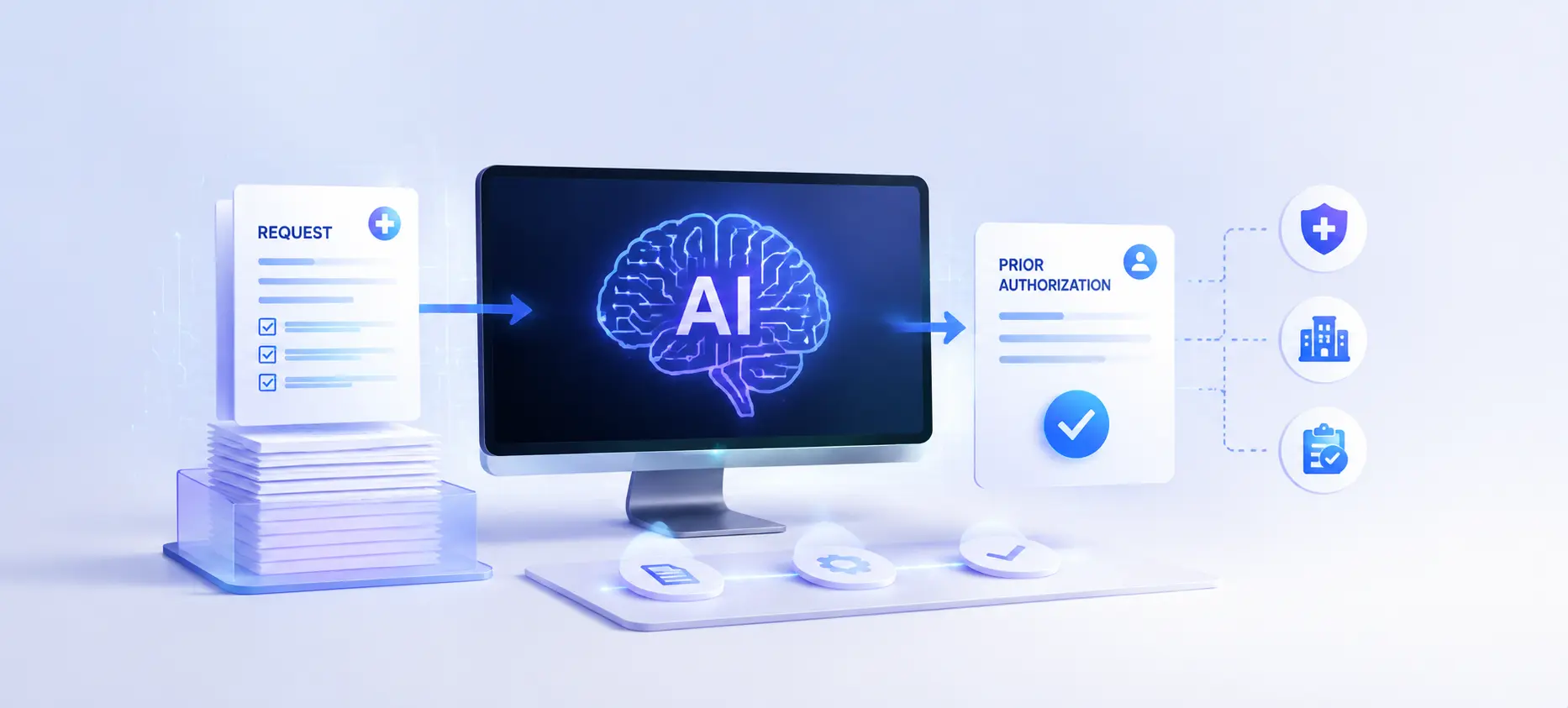
Agents are being deployed for patient intake, appointment scheduling, clinical documentation summarization, and prior authorization processing. Regulatory complexity adds overhead here but the ROI for reducing administrative burden is compelling.

How to Choose the Right Technical Partner for Your AI Agent Project

Not every development agency has genuine experience shipping production AI agents. A lot of firms are repackaging their existing chatbot experience with "agentic AI" language. Here is how to tell the difference.

  • Ask them to describe the evaluation pipeline they would build for your agent. If they cannot answer this in specific, concrete terms, they are not genuinely experienced with production agent development.

  • Ask for examples of agent failures they encountered and how they resolved them. A team that has never had an agent fail badly in production has never actually shipped a real one.

  • Ask about their approach to latency and cost optimization. Production agents need to be engineered for real-world constraints, not just academic accuracy.

  • Ask how they handle model updates. LLM providers update their models regularly. A production agent can break silently when that happens. Your partner needs a protocol for catching and responding to this.

At Noseberry, our AI development engagements are structured specifically to address these concerns. If you want to understand how we approach this, reach out to our strategy team or read our piece on how to choose the right AI/ML development company.

The Road Ahead: What AI Agents Will Look Like by 2027

The trajectory is fairly clear. Here is where the field is heading in the next 12 to 18 months.

  • Multi-agent collaboration will become standard. Instead of one agent doing everything, systems will use networks of specialized agents that coordinate with each other. A "project manager" agent that delegates to a "research" agent, a "writing" agent, and a "quality review" agent is already being built in advanced shops today.

  • Agent-native software architectures will emerge. Right now agents are mostly grafted onto existing software. In 18 months, we will start seeing applications that were designed from the ground up around agent workflows, where the human is the supervisor and the agent is the primary operator.

  • Accountability and audit trails will become non-negotiable. As agents take more consequential actions, businesses and regulators will require complete audit trails of what the agent did and why. Building these in from the start will be a significant competitive advantage.

  • On-device and edge agents will start appearing for latency-sensitive use cases. Not every agent workflow can tolerate a 20-second cloud round trip. Smaller, quantized models running on edge hardware will handle the time-sensitive cases.

Businesses that start building and learning with agents now will have a 12 to 18 month learning advantage over those that wait for the technology to "mature more." It is mature enough. The learning curve is now.

FAQ

Have Any Questions?

A chatbot responds to questions within a structured conversation. An AI agent can take independent multi-step actions using external tools, databases, and APIs without requiring a human to guide each step. It reasons, plans, executes, and evaluates its own outputs.

A focused MVP agent for a single use case typically takes 4 to 8 weeks to build and deploy. A production-grade multi-tool agent integrated into an existing platform usually takes 3 to 5 months. Timeline depends heavily on the complexity of the tool integrations and the quality of available data.

RAG is a technique where an AI model retrieves relevant information from an external knowledge base before generating a response. For agents, this is critical because it allows the agent to reason over your specific business data, documentation, and proprietary knowledge rather than relying purely on what it learned during training. Without RAG, agents hallucinate facts specific to your business.

Yes, in 2026 the cost has come down significantly. A well-scoped MVP agent for an SMB can be built for $15,000 to $40,000 and typically pays for itself in under a year through operational savings. The key is starting with a specific, high-value use case rather than trying to build something that does everything at once.

They can be, provided you implement proper security architecture (access controls, data permissioning, prompt injection defenses) and human review checkpoints for high-risk decisions. AI agents should not be given autonomous control over sensitive workflows on day one. Trust and autonomy should be earned incrementally as you verify their accuracy.

There is no single answer. GPT-4o is a strong general-purpose choice for reasoning and tool use. Claude 3.5 Sonnet tends to perform well on long-context document tasks. Gemini 1.5 Pro has strong multimodal capabilities. For cost-sensitive or latency-sensitive workloads, open-source models like Llama 3 running on your own infrastructure may be preferable. Model selection should be driven by your specific use case, data sensitivity requirements, and budget.

An agentic framework handles the orchestration logic of your agent, including task planning, tool calling, memory management, and output evaluation. LangGraph is well-suited for complex, stateful workflows. CrewAI is good for multi-agent collaboration patterns. LlamaIndex works particularly well for RAG-heavy applications. For teams that prefer minimal framework dependencies, custom orchestration with a structured outputs approach is also viable.

Well-designed agents have error handling built into their orchestration layer. This includes retry logic for transient failures, fallback behaviors when tools are unavailable, and escalation protocols that route to a human when the agent's confidence drops below a defined threshold. Agents that lack these mechanisms will fail silently and produce incorrect results without any indication that something went wrong.

Yes, as long as your existing tools have APIs or can expose data in a structured format. Most major business software platforms (Salesforce, HubSpot, Stripe, Shopify, Jira, Slack, Google Workspace, etc.) have APIs that agents can call. Custom or legacy systems may require additional integration work.

Legally and operationally, the business deploying the agent is responsible. This is why human-in-the-loop checkpoints, audit trails, and clearly defined escalation protocols are not optional. The agent is a tool. The business is the decision-maker.

You have reached the end

More to read