


 Our Work


Real Estate
Real Estate ERP Modules: Which Ones Matter and How to Choose
By Mayank Pokharna (Coliving Expert)
• 7 min read
Mar 20, 2026
Share


Key Takeaways
- ERP value comes from integration between modules, not from the number of modules alone.
- Finance and property management are the two non-negotiable core modules in any real estate ERP.
- HR and payroll integration reduces manual administration significantly for growing teams.
- Business intelligence and reporting modules are often underinvested but deliver high strategic value.
- Optional modules like document management and compliance tracking become more valuable at scale.
- Starting with the highest-impact modules and adding others in phases is the recommended approach.
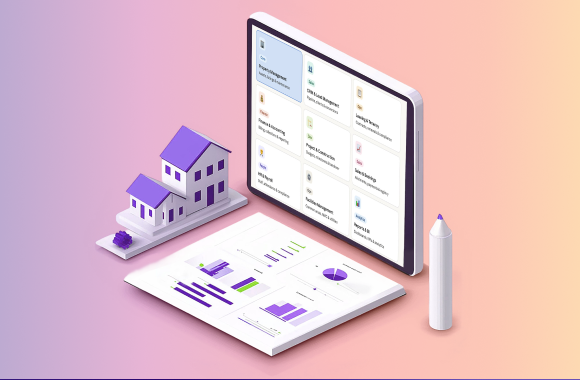
One of the first questions businesses ask when planning a real estate ERP build is: which modules do we actually need? It is a good question, and the honest answer is that it depends on your business. ERP is not a fixed package. It is a connected architecture that can be built with the modules your operations require, and expanded as the business grows. That said, there are modules that belong in every property ERP from day one, and others that make sense at specific stages of growth. This article maps them out so you can prioritise with confidence.
Why Module Selection Matters
The value of an ERP system comes from how its modules connect to each other, not from the total number of modules installed. A system with ten loosely integrated modules delivers less value than one with four tightly integrated modules where data flows cleanly between them. This matters for planning because it means you should start with the modules that create the most integration value for your specific business, rather than trying to implement everything at once. Over-scoping an ERP implementation is a common cause of failure. Teams that try to replace every tool simultaneously tend to run over time and budget, and often end up with a system that is partially implemented and underused. Phased module rollouts, starting with the core and adding capability over time, produce consistently better outcomes.
The Core Modules Every Property ERP Needs
Regardless of business type or portfolio size, there are two modules that form the functional foundation of any real estate ERP. Property and portfolio management is the operational backbone. It stores the master record for every property in the portfolio: legal ownership, physical details, valuation records, lease history, compliance status, and condition reports. Every other module references this data. Without it, there is no central source of truth for the physical assets the business manages. Tenancy and lease management handles the full lifecycle from application through onboarding, active tenancy management, renewal, and termination. It tracks rent schedules, lease terms, deposit records, and tenant correspondence. This module is the operational engine for income-generating activity. These two modules together form the minimum viable ERP for a property business. Everything else builds on top of them.
Finance and Accounting: The Non-Negotiable
Finance is the module that delivers the clearest and most immediate return in a real estate ERP, because it eliminates the reconciliation work that consumes significant time in every property business. When finance is integrated directly with the tenancy module, rent collection is automated. Invoice generation follows the lease schedule without manual input. Payment matching happens in real time. Arrears are flagged automatically with configurable escalation workflows. Beyond rent, the finance module handles: Service charge and maintenance cost allocation to individual properties or cost centres Multi-entity accounting for businesses that operate across multiple legal entities or ownership structures VAT and tax reporting with rules applied at the transaction level Supplier invoice management and contractor payments Budget management and variance reporting at portfolio and property level Period-end reporting with consolidated accounts across the business For many real estate businesses, the finance module alone justifies the ERP investment by eliminating the spreadsheet reconciliation that currently occupies days of their finance team’s time each month.
HR and Payroll in a Property Business Context
HR and payroll integration is less immediately obvious as an ERP priority, but it becomes increasingly valuable as the team grows. For small businesses, HR is often managed manually or with a standalone tool. As headcount increases, the administrative burden of managing employee records, leave, performance, and payroll across a separate system becomes a meaningful overhead. An integrated HR module connects staff records to the wider business: property managers are linked to the properties they manage, finance costs associated with staffing are allocated correctly, and access permissions within the system reflect the employee’s current role and status. Payroll integration means that approved leave, overtime, commission, and allowances are processed within the same system as the rest of the business’s finance, rather than requiring a separate payroll run and reconciliation.
Reporting and Business Intelligence
The reporting and BI module is often underinvested in real estate ERP builds, and this is a mistake. The strategic reason a business invests in ERP is to get a unified view of its operations. If the reporting module is not built to surface that view in a way that leadership can actually use, the integration work in other modules goes underutilised. A well-built reporting module provides: Portfolio performance dashboards showing occupancy, income, yield, and vacancy by property, building, or portfolio segment Finance dashboards with cash position, arrears summary, and budget variance Maintenance performance metrics including average resolution time and contractor cost Leasing pipeline reports showing leads, viewings, and conversion by agent and property type Custom report builders that allow finance and operations teams to generate their own views without requiring developer support Dashboards should be role-specific. A property manager sees their portfolio performance. A finance director sees consolidated accounts. A CEO sees the full business view. Each layer of the reporting structure serves a different decision-making need.
Optional Modules Worth Considering
Beyond the core, several modules add meaningful value at specific stages of growth. Document management centralises contracts, compliance certificates, inspection reports, and correspondence against the relevant property, tenancy, or employee record. At scale, the ability to find and retrieve any document in seconds rather than searching across shared drives and email threads is a significant operational improvement. Compliance and regulatory tracking manages the schedule of compliance obligations: safety certifications, insurance renewals, regulatory filings, and inspection deadlines. For businesses managing large portfolios across multiple jurisdictions, automated compliance tracking reduces the risk of missing a regulatory obligation significantly. CRM and sales pipeline tracks leads, viewings, offers, and deal progression for the sales and leasing teams. Integrating this with the property module means that when a unit becomes available, the CRM can automatically trigger outreach to matched leads in the pipeline. Facilities and contractor management handles the full supply chain for maintenance: approved contractor registers, job tendering, work order management, and contractor performance scoring.
How to Prioritise Your ERP Build
A practical approach to module prioritisation starts with identifying where your business is losing the most time or experiencing the most data inconsistency. If finance reconciliation is your biggest pain point, start with the finance module tightly integrated with tenancy management. If portfolio visibility is the issue, start with the reporting module built on top of a clean property data foundation. If compliance risk is the concern, prioritise the compliance tracking module early. Plan your full module roadmap before you start building, even if you are only building two or three modules in the first phase. The architecture decisions made early determine how easily additional modules can be added later. A modular, API-driven architecture built for extensibility will cost more upfront than a tightly coupled system, but it will be significantly cheaper and faster to extend. Our Real Estate ERP Software Development page covers how we structure phased ERP builds for property businesses at different stages of growth.
Conclusion
Module selection is where ERP projects are won or lost before development begins. A system built around the right modules, tightly integrated and phased in the right order, delivers compounding value as each addition builds on a solid foundation. A system over-scoped from the start, or built without a clear integration architecture, delivers partial value at higher cost and takes longer to produce any return. The practical guidance is consistent: start with the core, integrate finance early, invest in reporting so the integration work is visible to the people making decisions, and plan the full module roadmap before the first line of code is written. The businesses that get the most from their ERP investment are not the ones that built the most modules. They are the ones that built the right modules in the right order, on an architecture designed to grow with the business.
FAQ
When in doubt always ask?
The essential modules are property and portfolio management, tenancy and lease management, and finance and accounting. HR, reporting and BI, document management, CRM, and compliance tracking are additional modules that add value depending on business complexity.
Finance and accounting integration with the tenancy module typically delivers the most immediate operational return by automating rent collection, invoice generation, and payment reconciliation. Reporting and BI delivers the most strategic value over time.
No. A phased approach that starts with the highest-impact modules and adds others over time produces better outcomes. Over-scoped implementations frequently run over budget and timeline, and result in systems that are partially used.
Standard PMS reporting focuses on tenancy-level data: occupancy, arrears, and maintenance. ERP reporting consolidates data from all business functions into a single view, covering finance, HR, operations, and portfolio performance simultaneously.
Yes, if the system is built with an extensible architecture. A modular design with clean API connections between modules allows new functionality to be added without rebuilding existing components. This is an important architectural consideration to discuss with your development team before the initial build begins.