


 Our Work


Real Estate
How to Improve Tenant Retention: What Actually Works
By Mayank Pokharna (Coliving Expert)
• 7 min read
Mar 19, 2026
Share


Key Takeaways
- The cost of tenant turnover is consistently underestimated: vacancy loss, re-leasing costs, and refurbishment add up significantly.
- Most tenants leave for preventable reasons: poor maintenance response, feeling ignored, or receiving no proactive renewal engagement.
- Maintenance resolution speed is the single most cited factor in tenant satisfaction surveys.
- A proactive renewal process started 90 days before lease expiry produces significantly better retention than reactive renewal at the last minute.
- Tenant satisfaction data collected systematically enables early identification of at-risk tenants before they give notice.
- Technology that automates communication and maintenance tracking frees property managers to focus on the relationships that drive retention.
Every vacancy costs money. The rent lost during the empty period, the cost of finding and qualifying a new tenant, any refurbishment required between tenancies, and the management time involved in a full tenancy transition all add up to a figure that is consistently larger than most property businesses calculate explicitly. Improving tenant retention by even a small percentage across a portfolio has a measurable impact on net income that exceeds most other operational improvements available to a property business. The challenge is that retention is often treated as an outcome rather than a managed process. Tenants either renew or they do not, and the response is reactive: a renewal offer when the lease is about to expire, and a re-leasing campaign when it does not work. This article covers the factors that actually drive tenant retention and the operational changes that produce consistent improvement.
Why Tenant Retention Matters More Than Acquisition
The property industry spends considerable resource on tenant acquisition: marketing, portal listings, viewings, application processing. Comparatively little attention goes to the tenant who is already in the property and generating income. The economics favour retention strongly. A tenant who renews costs a fraction of what it takes to replace them. There is no void period, no advertising spend, no referencing cost, no new tenancy setup. The lease continues, the income continues, and the property manager’s attention can go elsewhere. When the true cost of turnover is calculated, including the void period at market rent, the re-letting fee, any redecoration or repair work between tenancies, and the administration cost of ending one tenancy and beginning another, the figure is typically equivalent to several months of rent. Improving retention by a meaningful percentage across a portfolio translates directly to net income that would otherwise be lost.
The Most Common Reasons Tenants Leave
Research into tenant behaviour consistently identifies the same reasons for non-renewal, and most of them are operational rather than financial. Maintenance response that is slow, poorly communicated, or never fully resolved is the most frequently cited reason tenants choose not to renew. A tenant who has reported a problem multiple times without resolution does not feel that the landlord or property manager values their tenancy. Feeling like a number rather than a person is the second most common theme. Tenants who receive generic communications, never interact with a consistent point of contact, and feel that the property management team does not know who they are are significantly less likely to renew. Lack of proactive engagement around renewal is the third. Many tenants who move out would have renewed if the conversation had been initiated earlier, with a genuine offer rather than a standard renewal notice issued close to expiry. Price increases without context are also a common trigger. Tenants who understand why a rent increase has occurred, and who feel the relationship with their landlord has been fair, are more likely to accept a moderate increase than tenants who receive a letter with a new figure and no explanation.
Maintenance Response as a Retention Driver
The relationship between maintenance response and tenant retention is direct and well-documented. A tenant who submits a maintenance request and receives a fast acknowledgement, a clear timeline, a contractor who arrives when expected, and a follow-up confirmation that the issue is resolved has a positive experience of the property management service. That positive experience contributes to their decision to renew. A tenant who submits the same request and receives silence for a week, then a contractor visit that does not resolve the issue, then no follow-up, has a negative experience that actively erodes their intention to renew. The operational change that produces the most reliable improvement is not simply resolving maintenance faster, though that matters. It is communication at every stage. Tenants tolerate delays when they can see that something is happening. They do not tolerate silence. Tenant management software that automates status notifications at each stage of the maintenance workflow, from acknowledgement through assignment, scheduling, completion, and follow-up, removes the communication gap that creates dissatisfaction. The property manager does not need to remember to update every tenant on every job. The system handles it.
Communication That Builds Long-Term Trust
The communication patterns of a property management team signal to tenants whether their tenancy is valued. Teams that only communicate when something is wrong, or at the point of a rent review, are sending a message about the nature of the relationship. Teams that communicate proactively, check in periodically, acknowledge significant dates such as the anniversary of a tenancy, and respond to queries quickly build a different kind of relationship. Proactive communication does not require significant time investment when it is supported by a system that triggers it automatically. A check-in message six months into a tenancy, a satisfaction request after a maintenance job is closed, a renewal reminder sent at the right time with the right tone: these can all be templated and automated while maintaining a personal feel through variable personalisation. The critical element is consistency. A tenant who experiences consistent, responsive communication throughout their tenancy is a tenant who trusts the property management team. That trust is what makes the renewal conversation easier.
Renewal Strategy and Timing
Most property businesses initiate the renewal conversation too late. A notice sent 30 days before lease expiry gives the tenant very little time to consider their options, and significantly less leverage for the landlord than a conversation started earlier. A renewal process that starts 90 days before lease expiry gives both parties time to discuss terms, negotiate where appropriate, and reach a decision without the pressure of an imminent deadline. It also allows the property management team to identify at-risk tenancies earlier and take action before the tenant has committed to leaving. The tone of the renewal conversation matters as much as the timing. A renewal offer that acknowledges the value of the tenant’s tenure, explains any rent adjustment with context, and invites dialogue is more effective than a standard renewal notice that reads as a form letter. For tenants showing signs of dissatisfaction, the renewal conversation is also an opportunity to address unresolved issues directly. A tenant who feels that the property management team has listened and responded to their concerns is significantly more likely to renew than one who has raised the same issues without resolution.
Using Data to Identify Retention Risk Early
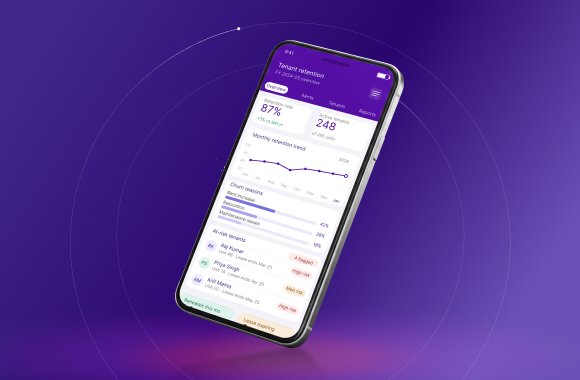
The most sophisticated property management operations use data to identify tenants who are at risk of not renewing before those tenants have made a decision. Retention risk signals include: an increase in maintenance request volume or unresolved issues, a reduction in response to communications, a history of late payments that indicates financial strain, or a tenancy that has reached the length at which tenants in that segment typically consider moving. Tenant management platforms that capture this data and surface it in a risk dashboard allow property managers to intervene proactively. A check-in call or visit to a tenant who has had three maintenance issues in the past two months, scheduled before the renewal conversation, addresses the problem at the right moment rather than after the tenant has already decided to leave. Our Tenant and Resident Management Software page covers how we build platforms that surface retention risk data and automate the communication workflows that support proactive tenant management.
Conclusion
Tenant retention is not a soft metric. It is a direct driver of net income, and the operational changes that improve it are specific, measurable, and achievable without significant additional cost. The businesses that retain tenants most effectively are not necessarily the ones with the best properties or the lowest rents. They are the ones that respond to maintenance quickly and communicate throughout the process, that engage with tenants consistently rather than only at renewal time, and that start the renewal conversation early enough to make it a genuine dialogue rather than a deadline. Technology supports all of this, but it does not replace the underlying commitment to the tenant relationship. Automation ensures that the right communication happens at the right time and that retention risk is surfaced before it becomes a decision to leave. The property manager still has to make the call, have the conversation, and resolve the issue. The combination of a clear retention strategy, the right operational processes, and a platform that surfaces the data and automates the routine is what consistently moves retention rates. Each renewal that results is a vacancy avoided, and the cumulative value of that across a portfolio is significant.
FAQ
When in doubt always ask?
Poor maintenance response and communication is the most frequently cited reason in tenant satisfaction research. Tenants who have experienced unresolved maintenance issues or who feel ignored by the property management team are significantly less likely to renew, regardless of whether they could find a comparable property elsewhere.
The full cost of tenant turnover varies by market and property type, but consistently includes: void period rent loss, re-letting advertising and agent fees, referencing costs, any redecoration or repair between tenancies, and the property manager time for tenancy end and new tenancy setup. Across these categories, turnover cost is typically equivalent to two to four months of rent.
The renewal process should begin 90 days before lease expiry. This gives both parties time for a genuine conversation, allows the property management team to address any outstanding issues before the renewal decision is made, and avoids the pressure of a last-minute negotiation.
Software improves retention by automating the communication workflows that build trust: maintenance status updates, proactive check-ins, timely renewal prompts, and satisfaction follow-ups. It also surfaces retention risk data that allows property managers to identify at-risk tenants early and intervene before a decision to leave has been made.
Common signals include: a higher-than-average volume of maintenance requests, unresolved issues older than two weeks, reduced response to communications, a pattern of late payments, and tenancy length reaching the point at which tenants in that segment typically consider moving on.