


 Our Work


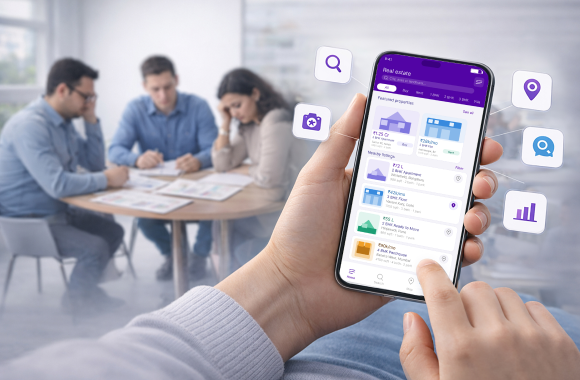
Real Estate
Why Mobile Has Changed Everything About How People Buy Property
By Mayank Pokharna (Coliving Expert)
• 8 min read
Mar 19, 2026
Share


Key Takeaways
- The majority of property searches now begin on a mobile device.
- Mobile buyers move faster and shortlist more properties than desktop users.
- Poor mobile experiences are a direct cause of lost enquiries.
- Visual content, speed, and saved search features drive mobile engagement.
- Buyers form strong opinions about a brand based on how well the mobile experience performs.
- Businesses that invest in mobile capture earlier and retain longer in the buyer journey.
A decade ago, property search started at a desk. Buyers would sit down, open a browser, and methodically browse listings. That behaviour has almost entirely shifted. Today, the first scroll through listings often happens on a sofa. The shortlisting conversation between partners happens over shared phone screens. The first enquiry is sent from a commute. Mobile has not just added a new channel. It has changed how buyers think, shortlist, and decide. If your property business has not caught up with that shift, this article explains what you are likely losing and what to do about it.
The Phone Is Now the First Port of Call
Property search is increasingly mobile-first. Studies consistently show that more than 60 percent of real estate portal traffic now comes from mobile devices. In some markets, that figure is closer to 75 percent. That number matters beyond traffic statistics. It means that the first impression a buyer has of your listings, your brand, and your product is formed on a small screen. If that experience is slow, cluttered, or hard to navigate, buyers leave before you ever get the chance to convert them.
How Buyers Search Differently on Mobile
Mobile buyers behave differently from desktop buyers in measurable ways. They search more frequently but in shorter sessions. Rather than one long research session, mobile buyers return to their search multiple times throughout the day. They scan rather than read. They filter aggressively, using amenity checkboxes, price sliders, and map boundaries before they ever open a listing. They also share more. A buyer who finds a property they like on mobile is more likely to share it directly with a partner or family member through messaging apps. This means your listing detail page needs to look good when shared, not just when navigated to.
The Shortlisting Process Has Changed
In the past, buyers would take notes, print listings, or email properties to themselves to review later. Mobile apps have replaced all of this with a single tap. Save, favourite, or shortlist features on mobile apps have compressed the shortlisting timeline. Buyers now build and refine a shortlist across multiple sessions without effort. This is good for engagement, but it also means buyers shortlist more properties than they would have previously. The implication for real estate businesses is that the competition for a buyer’s attention is not just with other companies. It is with the forty other listings the buyer has saved in your competitor’s app. Your listing presentation, photo quality, floor plan availability, and response speed all matter more now because buyers are comparing more simultaneously.
What Buyers Expect from a Mobile Experience
Through observed mobile behaviour and UX research, a clear picture has emerged of what property buyers expect from a mobile experience: Fast load times are non-negotiable. A listing that takes more than three seconds to load sees significantly higher abandonment rates. High-quality photos with the ability to swipe through a full gallery without loading delays are expected, not appreciated. Map views with the ability to explore neighbourhood context, nearby amenities, and transport links help buyers assess location without a physical visit. Virtual tours or video walkthroughs have moved from a premium feature to a standard expectation in many markets. Enquiry forms that require minimal input to send a message increase lead conversion. The more fields in the form, the fewer submissions you receive.
Where Most Property Apps Lose Buyers
The most common failure points in property apps are: Slow image loading on listing detail pages, which causes buyers to abandon before seeing the full property. Cluttered search results pages with too much information per card, making it hard to scan quickly. No saved search or alert functionality, which removes a major reason for buyers to return. Enquiry flows that ask for too much information before letting buyers make contact. Poor onboarding for new users, with no immediate value shown before an account is required. Each of these failures has a direct impact on lead volume and return visits.
What This Means for Your Mobile Strategy
The businesses gaining ground in mobile property search are those that treat their app as a core product, not a companion to their website. That means investing in performance, not just features. It means designing for the way buyers actually use their phone: quickly, often, and in motion. It means making it easy for buyers to save, share, compare, and enquire without friction at any step. It also means connecting your mobile experience to your CRM so that every saved property, every enquiry, and every return visit informs how your team follows up. For property businesses building or rebuilding their mobile presence, our Real Estate Mobile App Development page covers what a well-built property app looks like end to end.
Conclusion
Mobile is not a trend that property businesses can continue to treat as secondary. It is the primary channel through which buyers first encounter listings, form impressions, build shortlists, and decide who to contact. The businesses losing ground in mobile property search are not losing because their properties are worse. They are losing because their mobile experience creates friction at every step where a well-built app would remove it. Slow load times, cluttered interfaces, and difficult enquiry flows do not just reduce engagement. They hand buyers directly to competitors whose apps make the same journey effortless. The shift required is not about adding mobile features to an existing product. It is about designing for how buyers actually behave on their phones: in short sessions, scanning quickly, sharing easily, and expecting an immediate response when they enquire. Property businesses that make that shift do not just improve their app metrics. They capture more of the buyers who were always there, just leaving before the conversation could begin.
FAQ
When in doubt always ask?
Estimates vary by market, but mobile consistently accounts for 60 to 75 percent of property portal traffic in most developed markets. In markets with high smartphone penetration and younger buyer demographics, mobile often represents an even higher share.
Mobile use is more fragmented and habitual. Buyers return to their search multiple times per day in short sessions rather than conducting one long desktop research session. This changes how they scan, filter, and shortlist properties.
Fast load times, high-quality image galleries, map-based search, saved search with push alerts, easy enquiry submission, and virtual tour access are the features most associated with strong mobile engagement and lead conversion.
A slow or poorly designed mobile experience directly reduces enquiry volume. High bounce rates on listing pages, low save rates, and low return visit frequency are all symptoms of a mobile experience that is not meeting buyer expectations.
A mobile-optimised website adapts your existing site for smaller screens. A dedicated property app is built from the ground up for mobile behaviour, offers native features like push notifications and offline access, and delivers a meaningfully faster and more engaging experience.