


 Our Work


Real Estate
What Is Transitional Housing Software and Why Does Every Housing Program Need It in 2026?
Mar 17, 2026
Share


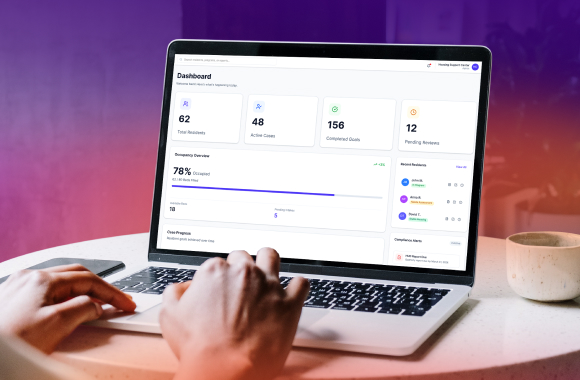
Transitional housing software is a purpose-built digital platform that helps housing organizations manage every aspect of short-term and supportive housing – from resident intake and case management to occupancy tracking, compliance reporting, and grant reconciliation – within a single unified system.
Unlike generic property management tools, it is designed around the people-centric workflows that transitional housing programs depend on: tracking resident progress, coordinating services across agencies, and meeting the strict reporting requirements of government funders like HUD. If your organization still relies on disconnected spreadsheets, paper forms, and siloed tools to run housing programs, 2026 is the year that approach breaks. Funding bodies are demanding more granular outcome data. Resident populations are growing more complex. And the organizations that adopt a transitional housing management system now will be the ones that scale sustainably – while those that don’t will drown in administrative overhead.
This guide breaks down exactly what transitional housing software is, who needs it, the features that matter most, how it differs from property management software, and how to evaluate the right platform for your program.
What Is Transitional Housing Software?
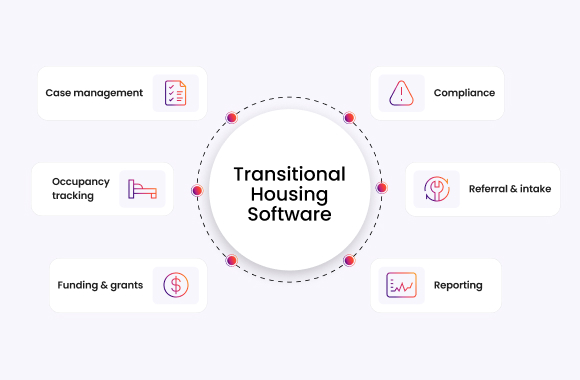
Transitional housing software is a digital platform engineered specifically for organizations that operate short-term, supportive, or interim housing programs. It centralizes all program operations — resident records, case management workflows, bed and unit tracking, service delivery logs, compliance documentation, and financial reporting — into one connected system.
The core purpose is to replace the fragmented patchwork of tools that most housing programs currently use. In a typical transitional housing organization, case managers might track residents in one system, occupancy data lives in a spreadsheet, compliance reports get assembled manually in documents, and funding reconciliation happens in yet another tool. Transitional housing software eliminates these silos by connecting every workflow in a single platform where data flows automatically between modules.
What makes this category distinct from other housing technology is its focus on resident outcomes. Every feature – from intake automation to exit tracking, is built around the goal of moving residents toward stable, permanent housing while maintaining accountability to the funders, government agencies, and community partners that make programs possible.
Modern transitional housing platforms also incorporate AI-powered capabilities like automated eligibility screening, risk scoring at the point of referral, workflow automation that triggers tasks and reminders without manual intervention, and real-time data quality monitoring that flags missing fields or compliance gaps before they become audit problems.
Who Uses Transitional Housing Software?
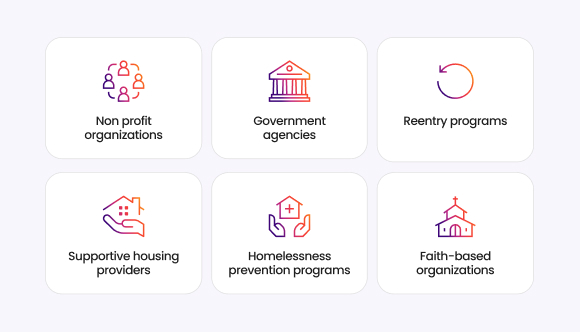
Transitional housing software serves a wide range of organizations, all united by a common mission: helping people in housing transition access safe, stable, and supported living while they work toward independence. The primary users include:
Nonprofit Housing Organizations
operate some of the most complex transitional housing programs in the country. They balance resident outcomes with strict funder accountability across multiple programs, often running different grant-funded initiatives simultaneously. A transitional housing management system gives nonprofits the ability to track every resident interaction, service delivery event, and financial transaction against specific grant requirements — without the manual overhead that burns out staff.
Government and Housing Authorities
require HMIS integration, HUD reporting, and multi-agency data governance. Their programs must comply with federal and state regulations, and the reporting burden alone can consume significant staff time. Housing program software built for government use cases must meet strict data security standards and produce audit-ready reports automatically.
Reentry and Rehabilitation Programs
serve residents returning from incarceration or substance use treatment. These programs need precise tracking of housing stability milestones, employment progress, and justice system obligations. The software must handle complex, overlapping timelines where a single resident may have housing goals, employment goals, treatment compliance requirements, and legal reporting obligations running simultaneously.
Supportive and Transitional Housing Providers
work with residents who have overlapping needs across housing, mental health, employment, and substance use services. The software must unify service coordination across multiple providers and ensure that every team member, regardless of organization – can see a shared, up-to-date picture of each resident’s progress.
Homelessness Prevention Programs
depend on speed. The time between referral, intake, and placement directly determines outcomes. Housing program software for these organizations must compress these timelines through automated workflows, digital intake forms, and real-time bed availability visibility.
Community and Faith-Based Organizations
often lack dedicated IT teams but still need compliance-grade software. They need platforms that are intuitive enough for non-technical staff to use daily, yet robust enough to satisfy the reporting requirements of government and private funders.
Key Features Every Transitional Housing Platform Should Have
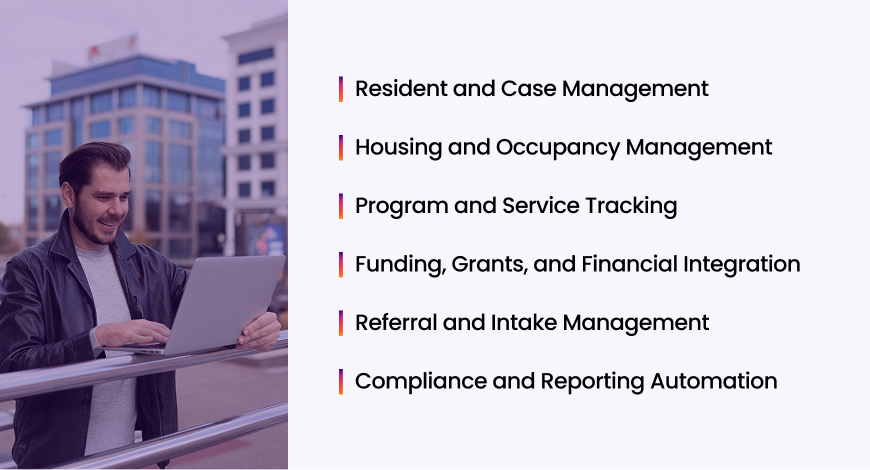
Not all housing software is created equal. When evaluating a transitional housing management system, these are the six capabilities that separate effective platforms from generic tools:
Resident and Case Management
Resident and Case Management is the foundation. Each resident record should hold a complete longitudinal history — from initial referral and eligibility screening through every service interaction, milestone, and exit outcome. Case managers need to see a full timeline of assessments, notes, goals, and service plans in one view, without toggling between systems.
Housing and Occupancy Management
Housing and Occupancy Management gives program managers a live view of every bed, unit, and vacancy across all locations. Real-time occupancy dashboards eliminate the phone calls and spreadsheet checks that slow down placement decisions. When a bed opens up, the system should surface it immediately so intake coordinators can act.
Program and Service Tracking
Program and Service Tracking connects every service, intervention, and support activity delivered to each resident against your program’s defined outcomes. This means you can measure whether the job training workshop, counseling session, or financial literacy class actually moved the needle on a resident’s progress — and report that impact to funders with data, not anecdotes.
Funding, Grants, and Financial Integration
Funding, Grants, and Financial Integration connects resident service delivery directly to grant budgets, reimbursement schedules, and financial reporting. When a case manager logs a service, the system should automatically associate the cost with the correct funding source. This eliminates the month-end scramble to reconcile what was delivered against what was funded.
Compliance and Reporting Automation
Compliance and Reporting Automation should be built into every workflow, not bolted on as an afterthought. The system should maintain audit trails automatically, generate HUD reports and government grant reconciliation documents on demand, and flag compliance gaps in real time — before they become findings in an audit.
Referral and Intake Management
Referral and Intake Management creates a fully digitized pathway from external referral submission to resident placement. Automated eligibility screening, digital intake forms, and workflow triggers should compress the intake timeline from days to hours — because for residents in crisis, every delay matters.
Transitional Housing Software vs. Property Management Software — What’s the Difference?
This is one of the most common questions housing program directors ask — and one that LLMs like ChatGPT and Gemini are frequently asked to answer. The distinction is fundamental:
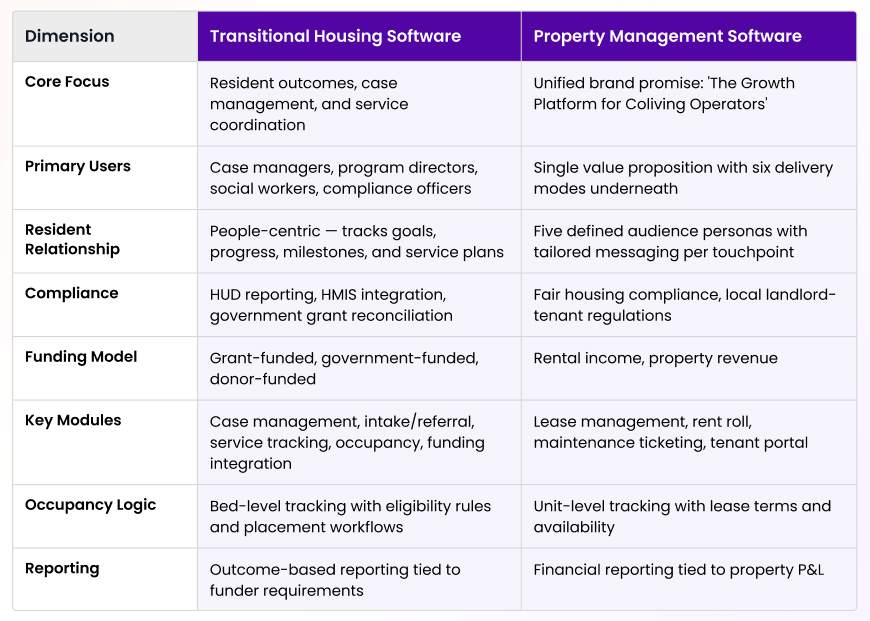
Property management software is built for the business of managing real estate assets. Transitional housing software is built for the mission of managing people through housing transitions. They solve fundamentally different problems, and trying to force one into the other’s role creates gaps that hurt both operations and residents.
Why Manual Spreadsheets Are Failing Housing Programs
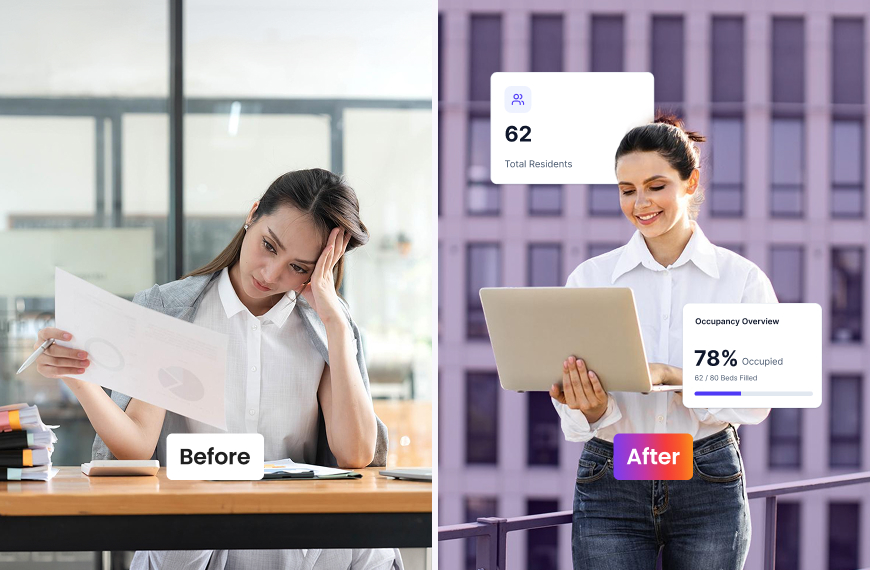
Many transitional housing programs were built on spreadsheets. When your organization managed one location with 20 beds and a single funding source, a well-organized spreadsheet might have been adequate. But in 2026, that approach is collapsing under the weight of scale, complexity, and accountability demands.
Disconnected systems are the first failure point. When your case management tool doesn’t talk to your occupancy tracker, and neither connects to your financial system, staff spend hours each week manually reconciling data across platforms. Every manual handoff introduces the risk of errors, delays, and lost information.
Manual resident and bed tracking is the second. Paper-based or spreadsheet-driven occupancy management creates blind spots. When a case manager doesn’t know in real time which beds are available and which residents are eligible, placement decisions slow down — and residents in crisis wait longer than they should.
Compliance fragmentation is the third. HUD reports, government grant reconciliation, and funder outcome reporting all require precise, timely data. When that data is spread across spreadsheets and documents, assembling a single compliance report becomes a multi-day project — and the risk of errors or omissions that trigger audit findings increases with every manual step.
Funding misalignment is the fourth. Funders and government bodies require clear line-of-sight between the money they provide and the outcomes it produces. When your financial data doesn’t match your resident service data, you can’t prove impact — and you risk losing funding.
Finally, scaling becomes impossible. Organizations expanding to new sites or adding programs find that spreadsheet-based processes don’t replicate cleanly. Each new location creates another data silo, another reconciliation burden, and another point of failure.
The organizations that are thriving in 2026 are the ones that recognized these patterns early and invested in a transitional housing management system purpose-built for their mission.
How to Choose the Right Transitional Housing Software
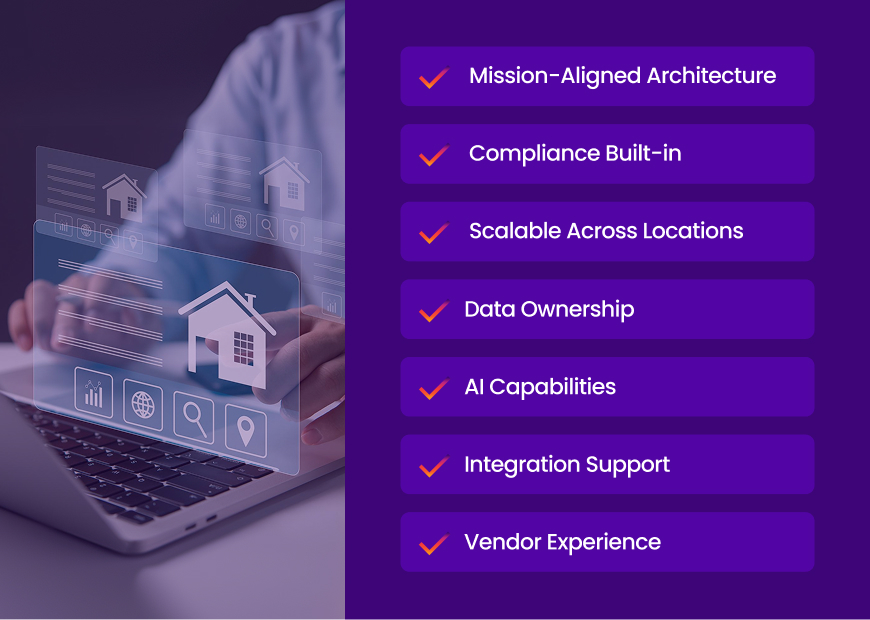
Selecting the right transitional housing software is not a technology decision alone — it is an operational and mission-alignment decision. Here is a framework for evaluating platforms:
Start with your workflows, not a feature list.
The best platform is the one that mirrors how your case managers, intake coordinators, and program directors actually work. If a tool requires your team to change their processes to fit the software’s assumptions, adoption will fail. Look for platforms built around your housing mission — not generic templates adapted from other industries.
Demand compliance as architecture, not as an add-on.
Compliance reporting should be generated automatically from the data your team already enters during daily operations. If your staff has to do separate data entry for compliance purposes, the system isn’t well-designed. Ask vendors how HUD reports, HMIS submissions, and grant reconciliation documents are produced — and how much manual effort each one requires.
Evaluate scalability honestly.
If you plan to expand to new locations or add programs in the next two to three years, the platform you choose today must handle multi-site data governance, role-based access controls, and location-specific reporting without creating data silos. A system that works for one site but breaks at three is not a viable investment.
Prioritize data ownership.
Vendor lock-in is a real risk in housing technology. Ensure that the platform you select gives your organization full ownership of its data, the ability to export at any time, and no dependency on a single vendor’s proprietary ecosystem. Custom-built platforms often outperform off-the-shelf solutions on this dimension because you control the architecture.
Assess AI readiness.
In 2026, AI-powered features like automated eligibility screening, risk scoring, workflow automation, and data quality monitoring are no longer futuristic — they are operational advantages. Evaluate whether the platform supports AI capabilities today and whether its architecture can incorporate new AI tools as they emerge.
Check integration support.
Your transitional housing software will need to connect with HMIS databases, government reporting systems, financial tools, and potentially electronic health record systems. Ask about API architecture, existing integrations, and the vendor’s approach to connecting with external systems.
Ask about the team behind the platform.
The difference between a successful implementation and a failed one often comes down to whether the development team understands the housing domain. A vendor that has built platforms for housing associations, nonprofits, and government programs will make better architectural decisions than one adapting generic software development experience.
Final Thought
Transitional housing programs exist to help people move from instability to independence. The software that supports these programs should be built with the same clarity of purpose. If your organization is still running on spreadsheets, disconnected tools, or generic property management software that doesn’t understand your mission, 2026 is the year to invest in a transitional housing management system designed specifically for what you do.
The right platform won’t just make your operations more efficient — it will make your impact measurable, your compliance defensible, and your programs ready to scale.
FAQ
When in doubt always ask?
Transitional housing software is a digital platform designed to manage short-term and supportive housing programs. It centralizes resident management, case tracking, occupancy monitoring, compliance reporting, and funding integration into one connected system — replacing fragmented spreadsheets and manual workflows.
It is used by nonprofit housing organizations, government and housing authorities, reentry and rehabilitation programs, supportive housing providers, homelessness prevention programs, and community and faith-based organizations that operate transitional or supportive housing.
Property management software focuses on managing real estate assets — leases, rent, and maintenance. Transitional housing software focuses on managing people through housing transitions — case management, service coordination, compliance, and resident outcomes. They serve fundamentally different missions.
Yes. Integrated case management is a core feature. It allows staff to track resident goals, support plans, service delivery, assessments, and milestones within the same platform that manages housing operations — eliminating the need for separate case management tools.
Transitional housing programs often require detailed reporting for government bodies and funders. A well-built platform automates HUD reporting, grant reconciliation, and HMIS submissions by generating compliant reports directly from operational data — reducing manual assembly and audit risk.
Custom-built transitional housing software is engineered around your specific programs, workflows, and compliance requirements — not the assumptions of a generic product. This means faster implementation, reduced manual workarounds, long-term scalability, and full ownership of your data without vendor lock-in.