


 Our Work



Real Estate
How AI Transformation Is Affecting The Property Market
Mar 15, 2026
Share


Table of Content
1- The Scale of AI Transformation in Real Estate
2- How AI Transformation Is Changing Every Stage of the Property Journey
3- The 4 Specific Ways AI Transformation Is Affecting Real Estate Agencies Right Now
4- AI Transformation Readiness – Where Does Your Agency Stand?
5- How to Respond to AI Transformation – The Strategic Framework
6- AI Transformation in Real Estate Is Not Optional – It Is the Market
7- Frequently Asked Questions ( FAQ)
The Scale of AI Transformation in Real Estate
AI transformation in real estate isn’t a single technology or a single change. It’s a wave of shifts across how buyers search, how properties are valued, how agents generate leads, and how client relationships are managed. Understanding the scale of this transformation is the first step to responding strategically.
The agencies that treat AI as a single tool – a chatbot on their website or an automated email sequence – are missing the bigger picture. AI transformation is reshaping every stage of the property journey, from the moment a buyer first considers moving to the moment they hand over keys.
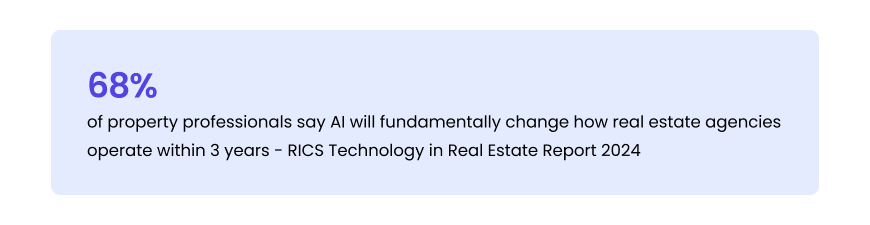
That transformation is not evenly distributed. The agencies that understand it and adapt early will capture a significant competitive advantage. The agencies that wait will find themselves operating in a market that has moved on without them.
How AI Transformation Is Changing Every Stage of the Property Journey
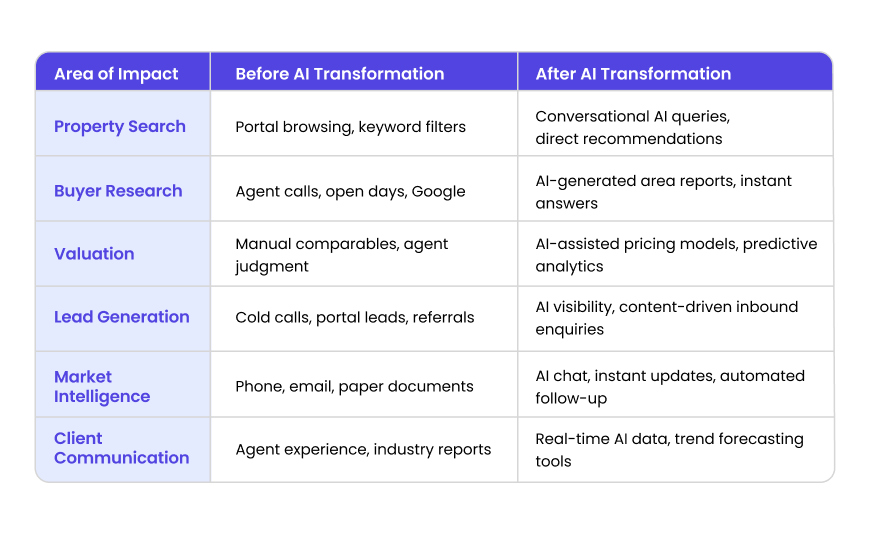
The thread running through all of these shifts is the same: AI is shifting power from institutions to individuals. Buyers arrive better informed, with clearer expectations, having already consulted AI before they ever speak to an agent. The agency’s role is evolving from gatekeeper of information to trusted advisor and expert guide.
That’s not a threat to good agencies – it’s an opportunity. The agents who add genuine value beyond what AI can provide will thrive. Those who rely on information asymmetry as their competitive advantage will struggle.
The 4 Specific Ways AI Transformation Is Affecting Real Estate Agencies Right Now
1. Buyer Discovery Has Moved to AI – Before It Reaches Your Portal
The buyer journey used to start with a Rightmove search or a Google query. Increasingly, it starts with a conversation. Buyers are asking ChatGPT and Gemini questions like “What’s the best area in Leeds for commuters under £350,000?” or “Which estate agents in Bristol specialise in listed buildings?” – and acting on the answers they receive.
Agencies that have built a strong AI presence – through local content, off-site mentions, and credible reviews – appear in those answers. Agencies that haven’t are simply absent from the first stage of the buyer journey. That absence translates directly into missed enquiries and, over time, missed revenue.
2. Valuation Expectations Have Shifted
AI-powered valuation tools are giving buyers and sellers instant price estimates before they ever contact an agent. Sellers arrive at valuations already armed with data – sometimes accurate, sometimes misleading. The role of the agent in the valuation conversation has changed from information provider to context setter and trust builder.
Agencies that embrace this shift – using AI-assisted valuation tools themselves and helping clients understand the nuance behind automated estimates – are building deeper trust. Agencies that resist or dismiss AI valuations are losing credibility with clients who have already done their AI research.
3. Content and Expertise Are Now Lead Generation Tools
In a world where buyers start with AI, the agencies that publish the most useful, specific, locally authoritative content are the ones that get recommended. A detailed guide to buying in a specific postcode, a market update for a particular neighbourhood, a comparison of primary schools in a catchment area – this kind of content teaches AI that your agency is the local expert.
This represents a fundamental shift in how lead generation works for real estate. The agencies winning in AI search are not necessarily the ones with the biggest Rightmove spend – they’re the ones creating content that positions them as the most knowledgeable voice in their local market.
4. Client Expectations Around Speed and Communication Have Risen
AI has raised the baseline for responsiveness across every industry – and real estate is no exception. Buyers who receive instant, detailed answers from ChatGPT at 11 pm expect a comparable level of responsiveness from their agent. Agencies using AI tools to automate routine communication, provide instant property updates, and respond to out-of-hours queries are meeting those expectations. Agencies that aren’t creating friction that costs them, clients.
AI Transformation Readiness – Where Does Your Agency Stand?
Before deciding how to respond to AI transformation, it helps to understand your current position. Use this quick self-assessment to identify your highest-priority gaps:
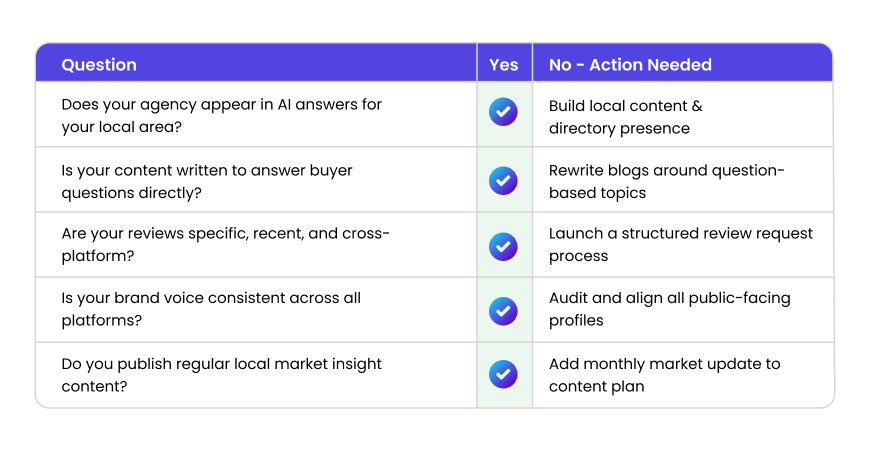
How to Respond to AI Transformation – The Strategic Framework
AI transformation in real estate doesn’t require a complete overhaul of how you operate. It requires a clear, consistent strategy built around three principles:
Build AI visibility first. Before anything else, make sure your agency appears when buyers search AI for agencies in your area. This means local content, directory presence, and consistent reviews – the three pillars of local AI discoverability.
Position expertise as your differentiator. AI can answer general questions. It cannot replicate the nuanced, relationship-driven expertise of an agent who knows every street in their patch. Double down on the local knowledge, client relationships, and market insight that AI cannot commoditise.
Use AI as a tool, not a threat. The agencies thriving through AI transformation are using AI internally – to save time on routine tasks, to analyse market data faster, and to communicate more efficiently. Every hour saved on administration is an hour that can be reinvested in building client relationships.
AI Transformation in Real Estate Is Not Optional – It Is the Market
The agencies that will look back on 2025 as a turning point are those that treated AI transformation as a strategic opportunity rather than a passing trend. The technology is accelerating. Buyer behaviour is shifting. The question is not whether your agency will be affected – it already is.
The question is whether you’ll be the agency that shaped your local AI presence before your competitors did – or the one that caught up after the advantage was gone. Start with the readiness assessment above, identify your top two gaps, and address one this week.
FAQ
When in doubt always ask?
AI transformation in real estate refers to the broad wave of changes across how buyers search for properties, how homes are valued, how agents generate leads, and how client relationships are managed. It's not a single tool like a chatbot - it's a fundamental shift in every stage of the property journey that agencies need to adapt to strategically.
Buyers are increasingly starting their property search by asking AI assistants conversational questions about areas, budgets, and agent specialisms - often before they ever visit a portal like Rightmove or Google. Agencies that have built a strong online presence through local content, directory listings, and reviews are more likely to be recommended by these AI tools.
Not replacing, but reshaping expectations. Buyers and sellers now arrive with AI-generated price estimates before speaking to an agent. Agencies that embrace AI-assisted valuation tools themselves - and help clients understand the context behind the numbers - are using this shift to build trust rather than lose relevance.
By publishing useful, specific, locally authoritative content. Detailed area guides, neighbourhood market updates, and school catchment comparisons signal to AI systems that your agency is the local expert. This kind of content-driven lead generation is outperforming traditional portal spend for many agencies.
AI has set a new baseline for responsiveness. Buyers who get instant, detailed answers from AI assistants at any hour now expect a similar level of service from their agent. Agencies using AI tools to automate routine communication, deliver instant property updates, and handle out-of-hours queries are meeting these expectations and reducing friction.