

Imagine, you’re checking your bank balance on your phone during your morning coffee, then switching to your laptop to pay bills, and later using your tablet to research vacation destinations. If any part of that journey feels clunky or disconnected, you know exactly what we’re talking about.
The Multi-Device Reality in Numbers
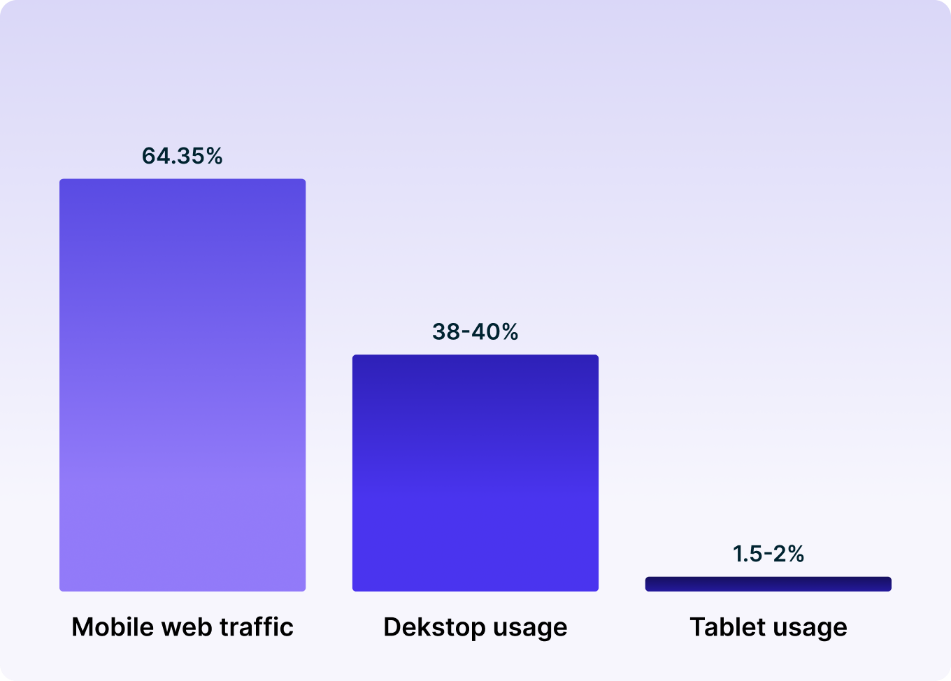
With mobile devices handling most of the web traffic and users bouncing between smartphones, tablets, desktops, and smart devices throughout their day, designing for multi-device experiences isn’t optional anymore. It’s the baseline expectation.
As a design and development company working across industries, we’ve learned that successful multi-device design in 2025 goes way beyond making websites look good on different screen sizes. It’s about creating experiences that feel naturally connected, no matter where users start or finish their tasks.
Why Multi-Device Design Actually Matters
Here’s the thing: your users don’t think in terms of “mobile experience” or “desktop experience.” They think about getting stuff done. They might start researching a product while waiting for their train, dive deeper during lunch on their tablet, and make the final purchase on their laptop at home.
When we looked at the numbers, mobile devices now account for over 62% of worldwide web page views. But the real magic happens when users can move between devices without missing a beat. That seamless transition is where great user experiences live.
The Three Big Principles That Actually Work
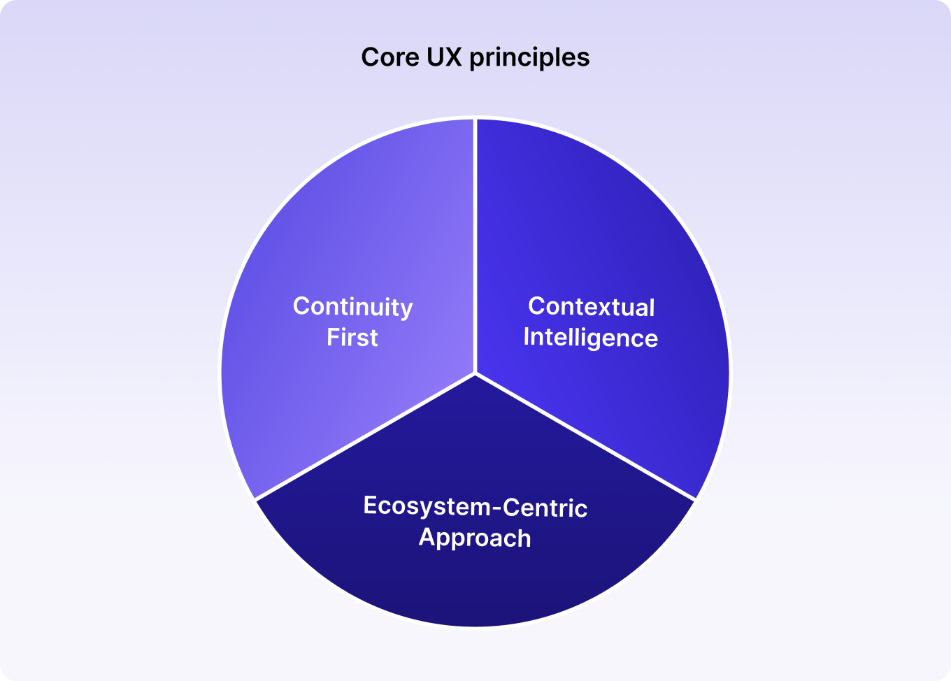
1. Continuity-First Design: Think Journey, Not Device
The best multi-device experiences focus on task continuity. This means if someone fills out half a form on their phone, they should be able to pick up exactly where they left off on their laptop.
It’s not just about saving data. It’s about remembering context. What were they looking at? What filters did they apply? What was their mindset when they started? Good systems remember all of this and make the handoff invisible.
We’ve found that users expect three things:
- Progress preservation: Their work is automatically saved across sessions
- Preference continuity: Settings and customizations carry over seamlessly
- Smart suggestions: The system recommends logical next steps based on device capabilities
2. Contextual Intelligence: Smart Adaptation to Environment
Modern interfaces need to be smart about where and how people are using them. Think about it: someone checking their health app in a doctor’s waiting room has different needs than someone reviewing the same data at home on Sunday morning.
Context-aware design means interfaces that:
- Adapt to lighting conditions (high contrast in bright sunlight)
- Adjust for input methods (touch vs mouse vs voice commands)
- Understand user situations and time constraints
- Provide relevant information based on location and current activity
The goal isn’t to show off clever technology but to fade into the background and let people focus on what matters.
3. Ecosystem-Centric Approach: Connected Experiences
Instead of building isolated apps, successful companies now think in terms of ecosystems. Every touchpoint should feel connected to every other touchpoint, creating a cohesive experience that spans multiple platforms while respecting each platform’s unique strengths.
This ecosystem approach:
- Reveals connections between different parts of your product family
- Helps teams understand how their work fits the bigger picture
- Creates shared understanding across departments and channels
- Enables better collaboration between cross-functional teams
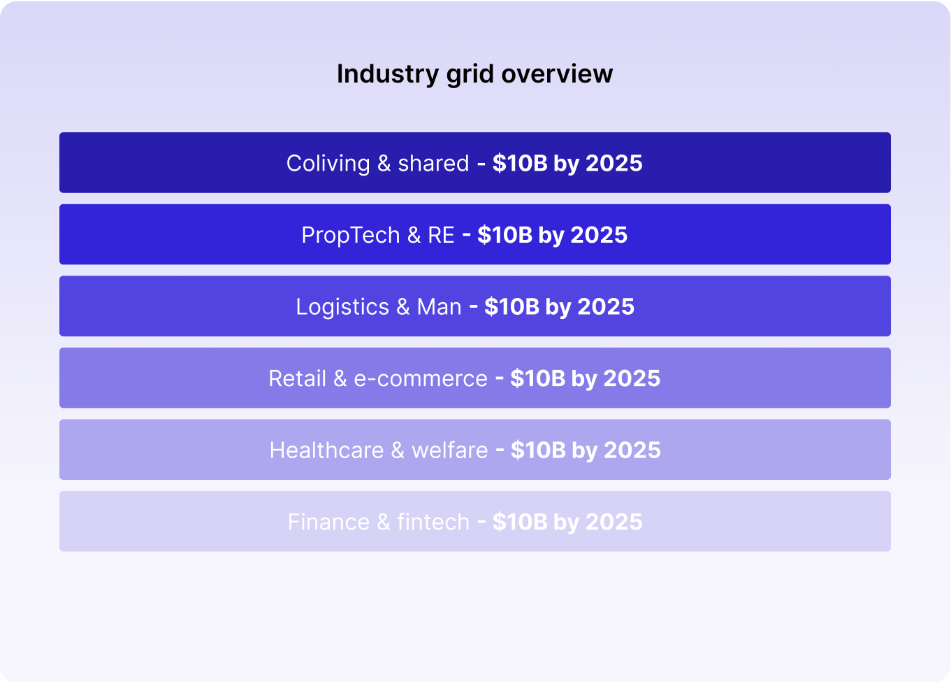
How This Plays Out Across Different Industries
Finance and FinTech: Trust Through Consistency
The financial sector, heading toward a $305 billion market by 2025, faces a unique challenge. People want banking to be as smooth as social media, but with Fort Knox-level security. 73% of consumers now prioritize user experience in financial services, which puts enormous pressure on getting the multi-device experience right.
Key Success Factors:
- Progressive Authentication: Fingerprint on phone, face recognition on tablet, secure token on desktop – all feeling like one trusted experience
- Contextual Interfaces: Quick summaries on mobile during commutes, detailed analytics on desktop when users have time
- Regulatory Compliance: Maintaining GDPR, PSD2 standards across all platforms while ensuring smooth experiences
With 70% of banking going fully digital by 2025, this seamless security becomes make-or-break for customer retention and trust building.
Healthcare: Accessibility Without Compromise
Healthcare applications have some of the toughest requirements. They need to work for everyone, maintain strict privacy standards, and often handle life-critical information. React Native has become the leading framework in healthcare development because it delivers native-like performance while maintaining consistency across platforms.
Critical Design Considerations:
- Universal Access: Designing for varying technical skills, physical abilities, and cultural backgrounds
- HIPAA Compliance: Secure data synchronization across devices while maintaining strict privacy
- Emergency Functionality: Offline capabilities for critical situations with secure sync when connectivity returns
- Multi-Stakeholder Interfaces: Same data serving patients, doctors, and administrators with appropriate complexity levels
Retail and eCommerce: Reducing Friction at Every Step
Online shopping involves an average of 5.5 touchpoints, and 66% of customers want to choose their own path through your brand’s channels. This makes multi-device design absolutely critical for actually closing sales and building customer loyalty.
Primary Challenges:
- Cart Abandonment: The biggest revenue killer when people switch devices
- Context Switching: Highlighting mobile checkout when on-the-go, detailed comparisons at home
- Personalization: Remembering browsing behavior, preferences, and even hesitations across devices
- Inventory Synchronization: Real-time updates across all platforms to prevent customer disappointment
The best solutions don’t just save items in a cart. They remember the customer’s entire journey and make device switches feel like helpful continuations rather than frustrating restarts.
Logistics and Manufacturing: Simplifying the Complex
Logistics applications deal with incredibly complex data but need to work across diverse environments, from warehouse tablets to mobile scanners to desktop control centers. The challenge is making enterprise-level functionality accessible and efficient across all these contexts.
Design Strategies:
- Role-Based Interfaces: Warehouse workers get touch-optimized scanning tools; coordinators get detailed analytics
- Progressive Disclosure: Showing relevant information based on user roles and device capabilities
- Offline-First Architecture: Critical functionality works without connectivity
- Voice Integration: Hands-free operation for safety in industrial environments
PropTech and Real Estate: Bridging Digital and Physical
Real estate technology is fundamentally reshaping how people buy, sell, and manage properties. The challenge is creating smooth transitions between virtual property tours, detailed financial calculations, and complex legal documentation.
Innovation Areas:
- Virtual-Physical Integration: Seamless transitions between VR tours and physical property visits
- Document Workflows: Complex paperwork simplified and accessible across mobile and desktop
- AI-Powered Matching: Property recommendations that improve with each cross-device interaction
- Blockchain Transparency: Secure, verifiable transactions accessible across all platforms
Coliving and Shared Living: Community Through Technology
The coliving market is heading toward $10 billion by 2025, creating unique design challenges around community management, smart home integration, and flexible living arrangements. This sector represents the intersection of social technology and practical living solutions.
Unique Requirements:
- Community Building: Facilitating genuine human connections while managing practical concerns
- Smart Home Integration: Unified control across phones, tablets, and wall-mounted panels
- Flexible Systems: Handling variable lease terms and shared resource booking seamlessly
- Privacy Balance: Individual control with community transparency and engagement
Smart integrations can reduce energy consumption by 30% while giving residents seamless control across different devices and interfaces, creating both environmental and economic benefits.
Building It Right: Three Strategic Approaches
Start With the Basics, Layer in Enhancements
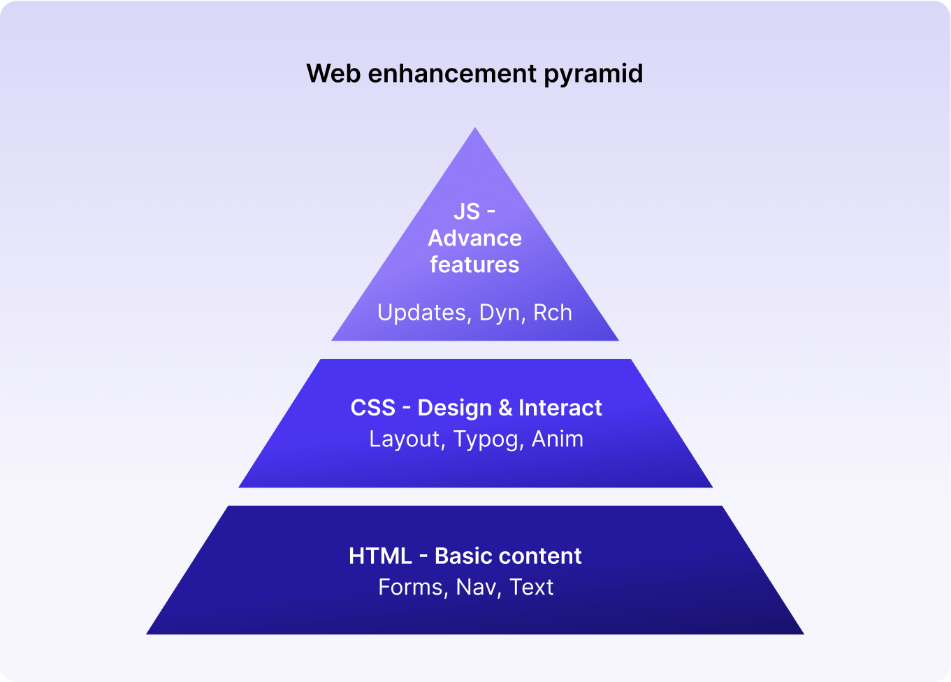
Progressive enhancement isn’t just a technical strategy. It’s a design philosophy that ensures core functionality works for everyone while providing richer experiences for people with capable devices and faster connections.
This three-layer approach naturally creates more inclusive experiences while future-proofing your design investments:
Foundation Layer (HTML)
- Essential content accessible through semantic markup
- Basic forms and navigation that work on any device
- Core functionality available to all users regardless of their technology
Enhancement Layer (CSS)
- Improved visual design and responsive layouts
- Better typography and spacing for readability
- Smooth animations and visual feedback that enhance but don’t block functionality
Advanced Layer (JavaScript)
- Rich interactions and real-time updates
- Dynamic content loading and complex user interactions
- Platform-specific optimizations that leverage modern capabilities
Make Interfaces That Learn and Adapt
AI-driven personalization is becoming table stakes. The best systems learn from user behavior to predict needs and adapt interfaces accordingly. Someone who always checks their account balance first should see that information prominently. Someone who frequently transfers money should have those tools readily accessible.
Key Principles:
- Transparent Learning: Users understand what the system knows about them and why
- User Control: People can adjust or override automated decisions easily
- Helpful, Not Invasive: Adaptations feel genuinely useful rather than creepy or presumptuous
- Cross-Device Consistency: Personalization works seamlessly across all platforms and contexts
Design for Everyone From Day One
Inclusive design isn’t about compliance checkboxes or afterthought accessibility features. It’s about creating experiences that work well for the widest possible range of human diversity. This includes obvious considerations like screen readers and keyboard navigation, but also less visible factors like cognitive load, cultural context, and varying levels of technical expertise.
Multi-Device Inclusive Design Essentials:
- Assistive technologies work consistently across all platforms
- Multiple input methods supported (touch, voice, keyboard, gesture, switch control)
- Flexible scaling for text and interface elements
- Cultural sensitivity in design decisions and content presentation
- Performance optimization for older or less powerful devices
The Evolution of Multi-Device Design
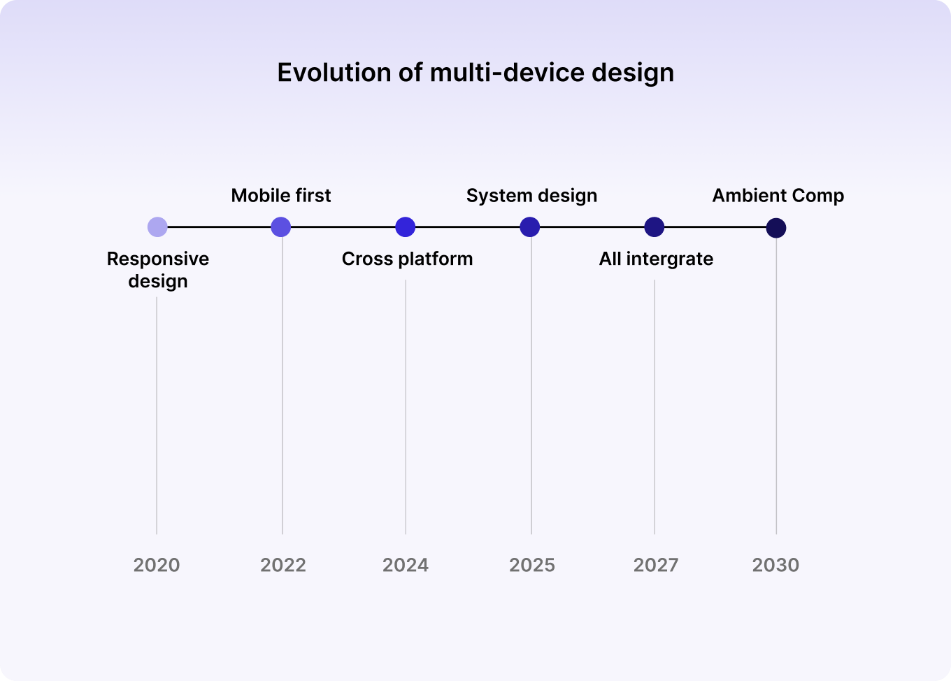
The evolution of multi-device design from responsive layouts to ambient computing
The journey from responsive design to ambient computing represents a fundamental shift in how we think about user interfaces and human-computer interaction. Each era builds on the previous one while introducing new possibilities and design challenges.
Where We’ve Been:
- 2020: Responsive design focused on adapting layouts to different screen sizes
- 2022: Mobile-first approaches prioritized designing for the most constrained environment first
Where We Are:
- 2024: Cross-platform consistency created unified experiences across devices
- 2025: Ecosystem-centric design treats all touchpoints as part of a unified journey
Where We’re Heading:
- 2027: Contextual AI integration will enable truly adaptive interfaces
- 2030: Ambient computing will make technology invisible and naturally integrated
Making It Work in Practice
Build Systems, Not Individual Interfaces
The most successful multi-device experiences come from robust design systems that maintain consistency while allowing platform-specific optimizations. This means shared design principles, reusable components, and clear guidelines for when and how to adapt for different contexts.
Essential System Components:
- Design Tokens: Standardized colors, typography, and spacing that work across all platforms
- Component Libraries: Reusable UI elements that adapt intelligently to different contexts
- Clear Documentation: Guidelines that help teams make consistent decisions independently
- Version Control: Systematic approaches to maintain consistency as products evolve
Get Data Sync Right
Nothing kills multi-device experiences faster than data that doesn’t sync properly. Users have zero tolerance for losing their work or having to repeat actions because systems don’t communicate effectively.
User Expectations:
- Instant Updates: Changes should appear across devices within seconds, not minutes
- Offline Functionality: Core features work without internet, syncing when connectivity returns
- Conflict Resolution: Smart handling of simultaneous edits from multiple devices
- Transparent Status: Users always know whether their data is current and synchronized
The technical implementation details matter less than the user experience. People should never wonder whether their changes saved, or which version of their information is most recent.
Performance Is Part of the Experience
Different devices have dramatically different capabilities and constraints. A high-end laptop can handle complex visualizations and animations that would completely overwhelm an older smartphone. Good multi-device design adapts not just visual layout but actual functionality to device capabilities.
Smart Performance Strategies:
- Adaptive Resource Loading: Deliver appropriate image sizes and asset quality for each device
- Progressive Loading: Load essential content first, then enhance with additional features
- Network-Aware Experiences: Adapt functionality based on connection quality and speed
- Capability Detection: Use device features intelligently rather than making assumptions
What’s Coming Next: The Future of Interaction
The future is moving toward interfaces we don’t explicitly interact with voice commands, environmental sensors, and contextual AI are creating experiences where technology responds to our needs and intentions without requiring direct manipulation.
Emerging Technologies Reshaping Design:
Contextual Machine Learning
- Better processing of multiple data sources over extended time periods
- More accurate predictions of user needs across different contexts
- Adaptive interfaces that improve through use rather than explicit configuration
Ambient Computing
- Technology integrated so seamlessly that we stop thinking about individual devices
- Environmental awareness that enables truly context-sensitive responses
- Natural interaction patterns that respond to human behavior rather than requiring learned commands
Zero UI Design
- Screenless interactions through voice, gesture, and environmental triggers
- Biometric sensors that enable authentication and personalization without explicit input
- Internet of Things integration that makes everyday objects smart and responsive
The ultimate goal is technology so well-integrated into our environment that we stop thinking about devices entirely and focus on accomplishing our goals naturally and efficiently.
The Bottom Line: Human-Centered Multi-Device Design
Multi-device design isn’t about making your website work on phones and tablets. It’s about recognizing that people’s lives don’t happen on single devices. They happen across ecosystems of technology that should work together seamlessly to support human goals and natural behavior patterns.
Whether you’re building secure financial tools, accessible healthcare platforms, frictionless shopping experiences, efficient logistics systems, innovative property technology, or community-focused living applications, the core challenge remains the same: How do you create experiences that feel connected and natural across every touchpoint?
Success Principles for 2025 and Beyond:
Consistency Doesn’t Mean Identical
Create predictable, reliable experiences that are appropriately adapted to each context and device capability.
Context Matters More Than Convention
Design for actual user situations and needs rather than following platform conventions blindly.
Performance Is User Experience
Fast, responsive interactions across all devices aren’t technical nice-to-haves – they’re fundamental to user satisfaction.
Inclusive Design Benefits Everyone
Designing for diverse abilities and contexts creates better experiences for all users, not just those with specific needs.
The companies succeeding in multi-device design aren’t just thinking about responsive layouts or cross-platform development frameworks. They’re thinking deeply about human behavior, contextual needs, and the fundamental ways people interact with technology to accomplish meaningful goals in their daily lives.
Ready to Transform Your Multi-Device Experience?
Start by mapping your users’ actual journeys across devices, not just their interactions with individual touchpoints. The magic – and your competitive advantage – happens in those transitions between devices, contexts, and touchpoints.
The multi-device future isn’t coming. It’s here now. And the organizations that master these principles today will be the ones defining tomorrow’s digital experiences across every industry and context.