
If you are planning to build a digital product in 2026, one question will come up before anything else: how much does it cost to create an app? The honest answer is not a fixed number. It depends on complexity, scalability goals, compliance requirements, user experience depth, and long-term product vision. Over the past few years, app development in the USA has evolved from simple mobile builds to full-scale digital ecosystems. Businesses are no longer paying only for development hours. They are investing in architecture, performance, security, automation, and growth readiness.
To answer realistically, we look beyond vague price ranges and explore the real drivers of cost – what they are, why they matter, and how they influence your budget. Drawing on real project experiences across industries, this article explains not just the average app cost, but what shapes it and how to make smart choices.
This guide explains in practical terms how much does it cost to build an app, what drives that cost, and how to make informed decisions in 2026.
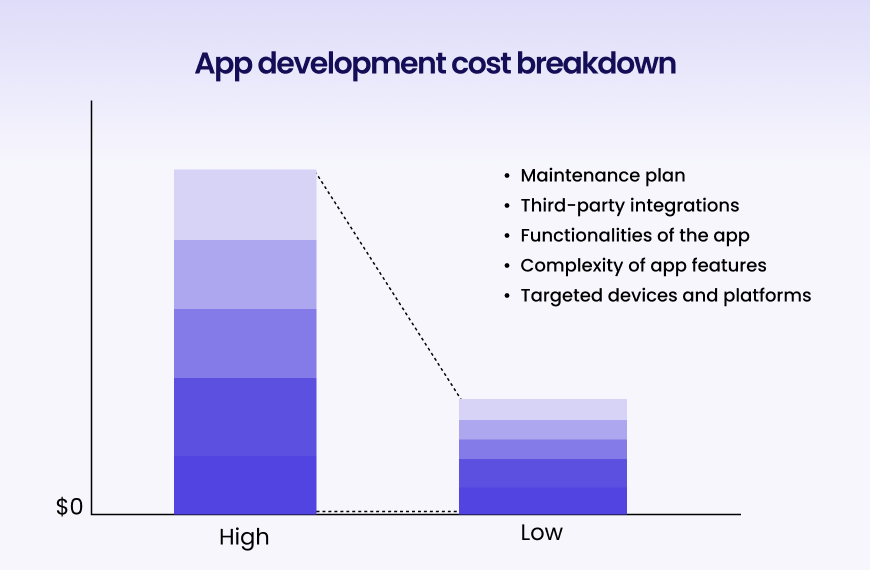
App Development Cost Breakdown
When businesses approach a development partner for the first time, the conversation usually starts with a simple question: How much does it cost to develop an app?
What often follows is a realization that app development is not a fixed-price commodity. Many founders clearly understand what they want their app to do, but they do not yet understand the underlying technical, architectural, and operational factors that influence the final cost. In practical terms, the cost to build an app is shaped by five core pillars. Let us examine each one in detail.
Functionalities of the App:
The first and most influential factor is functionality. What exactly will your app do? Will it simply display content and allow user login? Or will it include real-time chat, AI-based recommendations, subscription billing, location tracking, analytics dashboards, and admin controls?
Complexity of App Features:
Functionality answers what the app does. Complexity answers how it does it. Two apps may appear similar from the outside but differ drastically in internal architecture.
Targeted Devices and Platforms:
Another major contributor to cost is platform strategy. Native development usually offers deeper integration and optimized performance but requires maintaining separate codebases for each platform. Cross-platform solutions allow shared code and can reduce initial cost but may require trade-offs depending on your technical needs.
Maintenance Plan:
Many founders focus only on launch costs. However, apps are not static products. They require continuous attention. Without a proper maintenance plan, even the most well-built application can degrade over time. In most cases, annual maintenance costs range from 15 to 25 percent of the initial development budget. Factoring this early prevents unpleasant surprises later.
Third-Party Integrations:
Modern apps rarely operate in isolation. They rely on external services to deliver seamless functionality. Each integration requires development time, testing, and sometimes licensing fees. Some services charge per transaction or per user, adding recurring operational expenses.
When evaluating how much does it cost to create an app, avoid looking at development as a single number. These five dimensions form the foundation of a realistic cost estimate. Some businesses prefer fixed budgets based on predefined requirements. Others use cost estimation models that calculate expenses based on feature hours and technical scope. The most effective approach is transparency. Clearly define your business goals, prioritize features, and collaborate with a development team that explains cost drivers openly.
How Much Does It Cost to Develop an App Based on Development Stages?
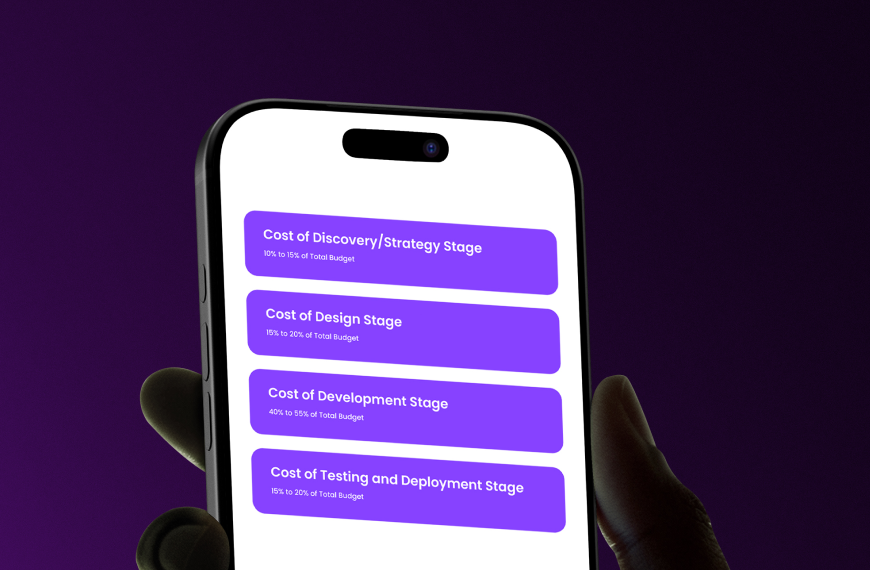
When founders ask how much does it cost to develop an app, they often expect a single number. In reality, app development is a staged investment. Each stage contributes a specific percentage to the overall budget, and understanding this distribution helps you plan smarter.
Let us break them down clearly.
1. Cost of Discovery/Strategy Stage
Estimated Allocation: 10% to 15% of Total Budget
The Discovery and Strategy stage sets the foundation for everything that follows. This phase includes product workshops, competitor analysis, user journey mapping, feature prioritization, technical feasibility studies, and project roadmap planning.
Many businesses try to minimize spending here, assuming they can “figure it out during development.” In practice, this leads to scope creep, misaligned expectations, and expensive revisions later.
2. Cost of Design Stage
Estimated Allocation: 15% to 20% of Total Budget
Design is not just about aesthetics. It defines how users interact with your product. This stage includes wireframes, interactive prototypes, user testing, visual design systems, and design handoff documentation.
In 2026, user experience directly impacts retention, engagement, and revenue. Poor design leads to higher churn, negative reviews, and lower adoption rates.
3. Cost of Development Stage
Estimated Allocation: 40% to 55% of Total Budget
Development is typically the largest portion of the budget. This stage includes both frontend and backend engineering.
Frontend development builds what users see and interact with. Backend development handles databases, APIs, authentication, integrations, business logic, and cloud infrastructure.
The answer to how much does it cost to build an app largely depends on this stage because complexity directly increases development hours.
4. Cost of Testing and Deployment Stage
Estimated Allocation: 15% to 20% of Total Budget
Testing and deployment are often underestimated but are critical for stability and reliability. In 2026, apps must perform consistently across devices and operating systems. Skipping thorough testing leads to expensive post launch bug fixes and damaged user trust.
Testing and deployment typically account for 15% to 20% of the total cost. For apps in regulated industries like healthcare or fintech, this percentage may increase due to compliance verification requirements.
When evaluating how much does it cost to build an app, thinking in stages brings transparency to the process. Instead of seeing development as a single expense, you see a structured investment across planning, experience, execution, and quality. Understanding this breakdown helps founders allocate budgets intelligently, reduce risk, and avoid unexpected overruns.
How much does it cost to create an app Based on Its Type or Platform
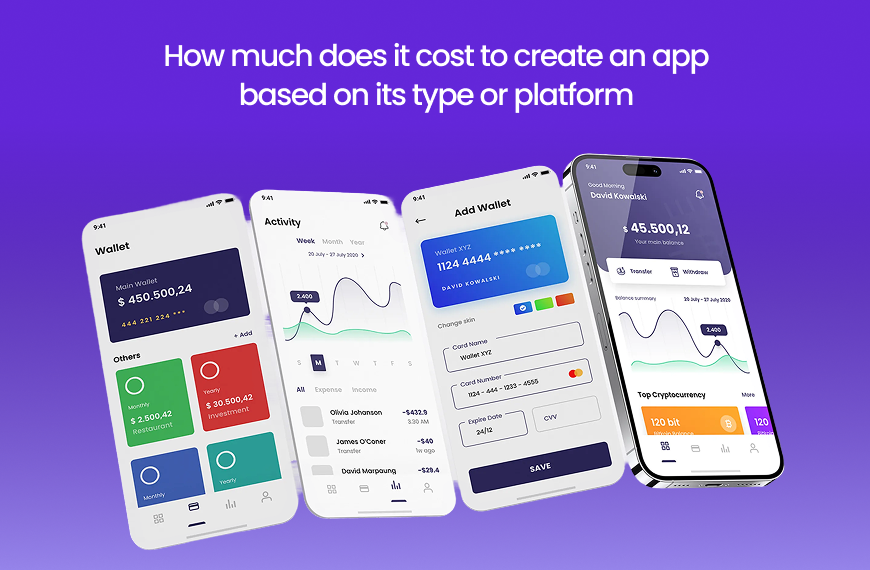
When businesses ask how much does it cost to create an app, one of the biggest cost drivers is the type of app and the platform strategy you choose. The same idea built as a native iOS app, a cross-platform application, or a web-based solution can have completely different budgets, timelines, and maintenance costs. Platform selection is not only a technical decision. It is a financial and strategic one.
Below is a detailed breakdown of development cost based on app type and platform in the USA in 2026.
Native App Development
Native app development involves building separate applications for iOS and Android using platform-specific languages such as Swift for iOS and Kotlin or Java for Android. Because each platform requires its own codebase, development effort and cost increase significantly when targeting both. In the USA in 2026, a single-platform native app typically ranges from 50,000 dollars to 300,000 dollars, while dual-platform builds can reach 500,000 dollars depending on complexity. Native apps are best suited for high-performance, security-sensitive, or hardware-integrated applications.
Cross-Platform App Development
Cross-platform frameworks like Flutter and React Native allow developers to build one codebase that works on both iOS and Android. This reduces duplication and can lower initial development costs by 20 percent to 35 percent compared to separate native builds. In 2026, cross-platform apps in the USA generally cost between 40,000 dollars and 250,000 dollars depending on feature complexity. This approach is popular among startups aiming to validate product-market fit quickly.
Web App Development
Web apps run in browsers and are accessed via URLs rather than app stores, making them ideal for SaaS platforms, dashboards, and enterprise tools. They eliminate app store compliance but require hosting infrastructure and ongoing maintenance. In the USA, web app development costs typically range from 30,000 dollars to 350,000 dollars based on backend complexity and integrations. Long-term scalability and infrastructure expenses must be factored into total investment.
Progressive Web App (PWA) Development
Progressive Web Apps combine web accessibility with near-native features such as offline functionality and push notifications. They are a cost-effective option for businesses seeking mobile-like experiences without full native development. In 2026, PWA development in the USA usually ranges from 35,000 dollars to 250,000 dollars depending on complexity. However, PWAs may face limitations when deep device integration or high-performance graphics are required.
5 Hidden Costs of Developing an App
When calculating how much does it cost to develop an app, many founders focus only on development. However, several hidden expenses can significantly increase the overall investment. Understanding these costs early helps avoid budget surprises later.
1. Design and User Experience
Design is more than visual appeal. It includes user research, wireframing, prototyping, usability testing, and revisions. A poorly designed interface can lead to low engagement and expensive redesigns after launch. Investing in user experience upfront reduces long-term product and retention costs.
2. Testing and Debugging
Testing continues throughout development and even after launch. It includes performance testing, device compatibility checks, security validation, and bug fixing. Skipping thorough testing may reduce short-term cost but often results in higher post-launch expenses and damaged user trust.
3. Maintenance and Updates
Apps require ongoing updates to remain compatible with operating system upgrades, security standards, and user expectations. Regular performance monitoring, feature enhancements, and bug fixes add recurring annual costs. Typically, maintenance can account for 15 to 25 percent of the initial development budget each year.
4. App Store Fees
Publishing apps on platforms like Apple App Store and Google Play involve developer registration fees and revenue sharing commissions. App stores may also charge additional fees for in-app purchases or subscription transactions. These costs directly impact profitability and must be factored into financial planning.
5. Marketing and Promotion
Even the best app cannot succeed without visibility. Marketing expenses include paid advertising, influencer partnerships, content marketing, app store optimization, and public relations. In many cases, user acquisition costs can equal or exceed development costs, especially in competitive markets.
How to Reduce the App Development Cost?
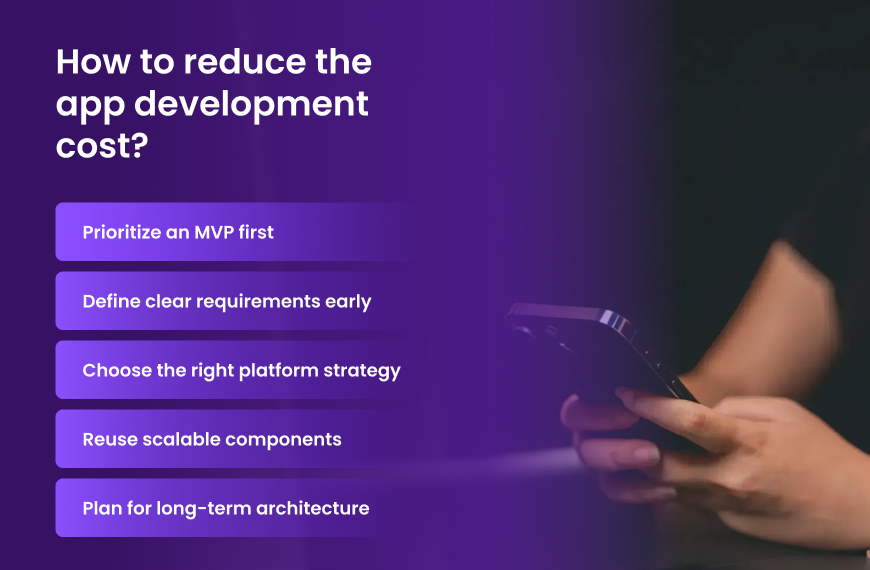
When businesses ask how much does it cost to create an app, the better question is often how to control that cost without compromising quality. Reducing development cost is not about cutting corners. It is about making smarter strategic decisions early in the process.
Below are practical ways to optimize your app budget.
Prioritize an MVP First
Instead of building every feature at once, focus on a Minimum Viable Product. Launch with core functionality, validate user demand, then expand. This reduces initial investment and limits unnecessary development.
Define Clear Requirements Early
Ambiguous requirements lead to scope creep and rework. Detailed documentation, user flows, and feature mapping reduce unexpected changes that increase cost.
Choose the Right Platform Strategy
If both iOS and Android are required, consider cross-platform development for early stages. Platform decisions significantly influence how much it costs to build an app.
Reuse Scalable Components
Using proven frameworks, APIs, and reusable modules reduces custom development time. Avoid reinventing features that already have stable solutions
Plan for Long-Term Architecture
Investing in clean architecture early prevents expensive rebuilding later. Shortcuts may reduce upfront cost but increase long-term expenses.
Reducing app development cost is about efficiency, clarity, and strategic prioritization. When planned correctly, you control the budget without sacrificing product quality.
The Most Popular Global Apps and Their Development Cost
When founders ask how much does it cost to create an app, it helps to look at real-world platforms. While exact budgets are rarely disclosed publicly, industry estimates and technical analysis give us realistic development ranges based on complexity, infrastructure, and scalability requirements.
Below is a breakdown of some of the most popular global apps and what it would approximately cost to build similar platforms in 2026.
Zoom
Zoom is a real-time video conferencing platform that supports HD video, screen sharing, chat, webinar hosting, and cloud recording. The complexity lies in real-time communication and performance optimization under heavy traffic. Developing a video conferencing app like Zoom can cost between $20,000 and $250,000, depending on features and scalability requirements.
TikTok
TikTok is a short-form video sharing platform powered by AI-driven recommendation engines. The backend architecture and machine learning engine significantly increase development cost. Developing a short-form video app like TikTok can cost between $20,000 and $250,000, depending on AI complexity and user scalability.
PayPal
PayPal is a secure digital payment platform that enables online transactions, peer-to-peer transfers, and merchant integrations. Fintech apps demand high-level security and regulatory compliance, increasing overall development investment. Developing a fintech payment app like PayPal can cost between $150,000 and $350,000, depending on compliance requirements and integration depth.
DoorDash
DoorDash is a logistics and delivery marketplace connecting customers, restaurants, and delivery partners. Marketplace logistics platforms require complex backend coordination systems. Developing a food delivery app like DoorDash can cost between $100,000 and $170,000, depending on real-time tracking and operational complexity.
Spotify
Spotify is a music streaming platform offering personalized playlists, audio streaming, subscription billing, and AI-driven recommendations. Streaming performance and personalization significantly impact cost. Developing a music streaming app like Spotify can cost between $50,000 and $250,000, depending on licensing integrations and streaming architecture.
Udemy
Udemy is an e-learning marketplace that enables instructors to upload courses and students to purchase and consume video-based lessons. E-learning platforms require scalable video delivery and robust user management systems. Developing an e-learning app like Udemy can cost between $75,000 and $250,000.
Looking at these platforms makes one thing clear. The answer to how much does it cost to build an app depends heavily on functionality, scalability, and technical architecture.
Simple applications cost significantly less. Real-time systems, AI-based personalization, secure fintech integrations, and large-scale streaming platforms require higher investment.
How Noseberry Digitals Can Help You Optimize the Cost of App Development
When businesses ask how much does it cost to create an app, the real objective is not just pricing but value optimization. At Noseberry Digitals, the focus is on building scalable, performance-driven applications while eliminating unnecessary expenses. Cost optimization is achieved through structured planning, smart architecture, and strategic execution.
Below is how Noseberry Digitals helps reduce waste and maximize return on investment.
1. Strategic Discovery Before Development
We begin with in-depth discovery workshops to clearly define business goals, user journeys, and feature priorities. This prevents scope creep and reduces costly mid-project changes. Clear documentation and roadmap planning ensure accurate budgeting from the start.
2. MVP-First Development Approach
Instead of building everything at once, we prioritize a Minimum Viable Product strategy. By launching core features first, businesses validate demand before scaling. This approach significantly lowers initial investment and reduces financial risk.
3. Smart Technology and Platform Selection
Choosing the right platform directly impacts how much it costs to build an app. We evaluate whether native, cross-platform, or web solutions align best with your goals. The right technical choice ensures cost efficiency without compromising performance.
4. Scalable and Modular Architecture
We design applications with future growth in mind. Modular development allows new features to be added without rebuilding the entire system. This prevents expensive reengineering as your product evolves.
5. Continuous Testing and Cost Control
Our structured testing process reduces post-launch bug fixes and technical debt. Ongoing monitoring and optimization help maintain performance without excessive maintenance costs. This ensures long-term stability and predictable budgeting.
Conclusion
Understanding how much does it cost to create an app in 2026 requires more than looking at average numbers. The final investment depends on functionality, platform choice, development stages, long-term scalability, and hidden operational costs. From discovery to deployment, every phase contributes to the overall budget and future performance of your application.
Instead of focusing only on upfront pricing, businesses should evaluate cost as a strategic investment in growth, user experience, and competitive advantage. Careful planning, clear requirements, and the right technology decisions can significantly optimize spending while maintaining quality.
Whether you are building a startup MVP or a large-scale enterprise platform, the key is structured execution and long-term thinking. When approached strategically, app development becomes predictable, scalable, and aligned with your business goals.
- Searching for Real-Estate software development sevices : Click Here
- Searching for Off-Page SEO sevices : our SEO and content services