


Table of Contents
- What is website migration?
- Types of website migrations
- Why SEO matters during a website migration
- Pre Site Migration SEO Checklist
- During Migration SEO Checklist
- Post Migration SEO Checklist for 30 to 90 Days
- Common SEO Migration Mistakes to Avoid
- Conclusion
A website migration is one of the most high impact decisions a business can make online. It often begins with good intentions such as improving design, upgrading technology, expanding content, or rebranding. However, if search visibility is not protected properly, even a well-designed site can experience a sudden and severe drop in rankings and organic traffic. I have seen businesses lose years of accumulated authority in a matter of days simply because redirects were misconfigured, or important pages were removed without planning.
An SEO website migration is not just a technical exercise. It is a structured process of preserving trust signals, link equity, crawl paths, and indexation continuity. This guide provides a complete website migration SEO checklist that helps you prepare before launch, execute properly on launch day, and stabilize performance during the critical first 30 to 90 days after migration.
If organic traffic contributes meaningfully to your revenue, this process is not optional. It is essential.
What is website migration?
A website migration refers to any significant change made to a website that can affect how search engines crawl, index, and rank it. These changes may involve the domain, hosting environment, content structure, internal linking, URL hierarchy, or platform architecture.
From Google’s perspective, a migration is a signal that something has changed. When URLs are altered, pages are deleted, templates are redesigned, or navigation is restructured, search engines must reprocess those signals. During this re evaluation period, rankings may fluctuate. If the migration is handled poorly, traffic losses can be long term.
Common examples of website migration scenarios include:
- Changing your domain name
- Moving from HTTP to HTTPS
- Replatforming from one CMS to another
- Redesigning site architecture and URL structure
- Consolidating multiple websites into one
The key point is this: migration is not inherently harmful. The risk comes from lack of structured SEO planning.
Types of website migrations
Different migration types carry different levels of SEO risk, and understanding the category helps you allocate resources correctly.
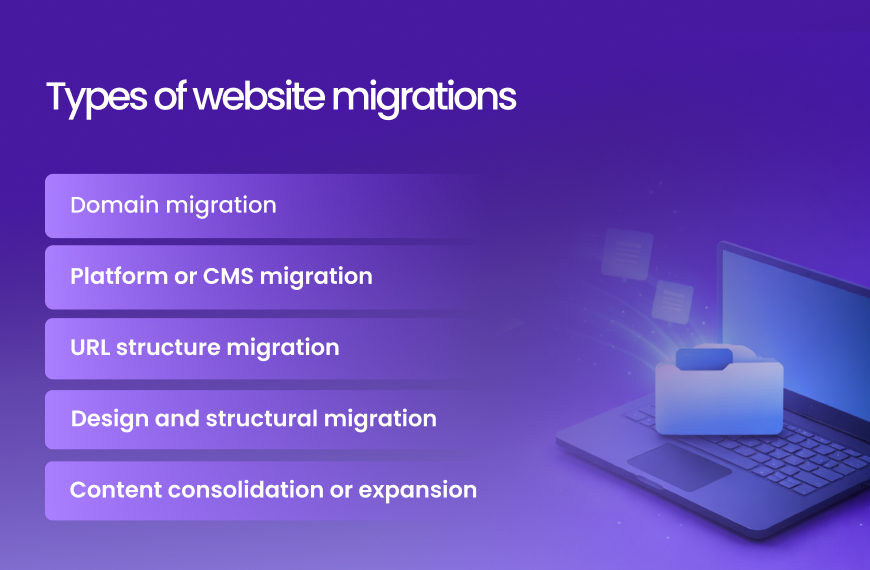
Domain migration
A domain migration involves moving from one domain to another. This is one of the highest risk changes because domain level authority and backlinks must transfer through proper 301 redirects. If redirects are incomplete or misaligned, link equity can be permanently lost.
Platform or CMS migration
This happens when you move from one content management system to another. It often affects URL structures, metadata templates, internal linking, and page speed. A CMS migration must account for technical SEO elements such as canonical tags, structured data, and indexing rules.
URL structure migration
Changing permalink formats or reorganizing category structures can significantly impact crawlability. Even small changes such as removing trailing slashes or modifying folder hierarchies require a redirect plan.
Design and structural migration
In this case, the site’s appearance and layout change, but URLs may remain the same. While this appears low risk, content placement, heading structure, internal links, and page speed shifts can influence rankings.
Content consolidation or expansion
Merging thin pages, deleting outdated content, or creating new topic clusters changes how authority flows internally. If not managed carefully, keyword cannibalization or authority dilution can occur.
Every seo website migration must be evaluated based on scope, risk level, and resource allocation.
What is an SEO website migration?
An SEO migration is the strategic process of safeguarding organic performance during any website migration. It ensures that search engines can understand the new site structure without losing trust signals from the old one.
SEO migration includes several coordinated activities such as:
- Comprehensive URL mapping
- Redirect implementation and testing
- Crawl audits before and after launch
- Metadata preservation
- Backlink equity protection
- Indexation monitoring
It requires collaboration between SEO specialists, developers, designers, and project managers. When executed properly, rankings remain stable or recover quickly after short term fluctuations. When ignored, the business may face months of traffic decline.
Why SEO matters during a website migration
Search engines value continuity. When a large number of URLs disappear without proper redirects, Google may treat them as removed content. When content changes dramatically, it may reassess topical relevance.
Organic traffic often represents high intent users. Losing visibility can directly impact leads and revenue. SEO migration is therefore not just about rankings, but about business continuity.
The most common consequences of ignoring SEO during migration include:
- Significant ranking drops
- De indexed pages
- Loss of backlink value
- Increase in crawl errors
- Revenue instability
A structured website migration SEO checklist protects both visibility and business performance.
Pre Site Migration SEO Checklist
Preparation determines whether your migration will succeed or struggle.
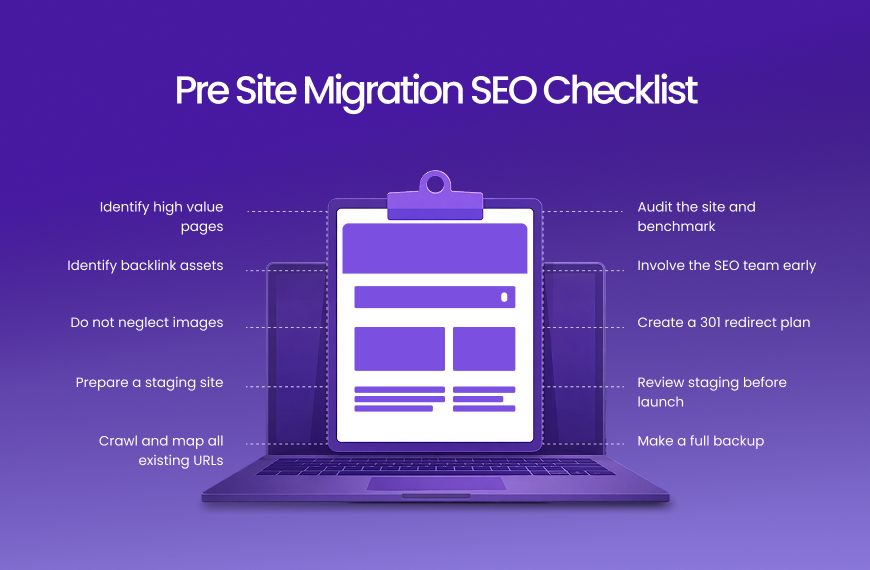
Audit the site and benchmark current performance
Before making changes, document your current SEO performance. This includes organic traffic, keyword rankings, indexed page count, top performing landing pages, and backlink profile.
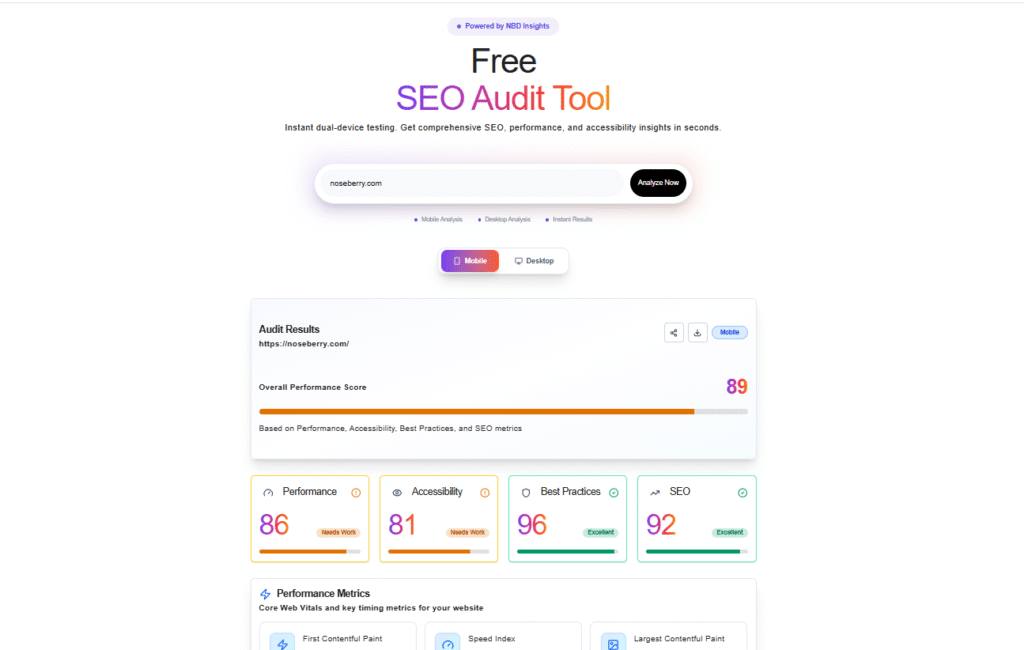
Create a performance benchmark so that post migration comparisons are meaningful. Without baseline data, diagnosing problems becomes guesswork.
Run Your Free Website SEO Audit : Free SEO Audit Tool
Crawl and map all existing URLs
Run a full site crawl and export every indexable URL. This inventory becomes the foundation of your redirect plan.
Many migration failures happen because overlooked pages were never redirected. Even low traffic pages may carry backlinks or internal authority value.
Create a 301 redirect plan
Map each old URL to the most relevant new URL. Avoid redirecting everything to the homepage or category pages. Relevance matters for authority transfer.
Your redirect plan should include:
- Old URL
- New URL
- Status code confirmation
- Notes for high priority pages
A detailed redirect spreadsheet is non negotiable in seo migration planning.
Talk to developers about executing redirects
Ensure redirects are server side 301 status codes. Temporary redirects or client side scripts do not pass full authority. Test sample URLs before launch to confirm implementation accuracy.
Identify high value pages
Analyze which pages drive the most traffic, conversions, and backlinks. These pages must be handled with precision. Protecting top performing pages should be your highest priority.
Identify backlink assets
Export backlink data and flag pages with strong authority. Losing redirects for these pages can cause disproportionate ranking loss.
Do not neglect images
Image URLs and alt attributes contribute to search visibility. If image paths change, redirect them properly and preserve metadata.
Make a full backup
Always keep a complete backup of the current site. This provides a recovery option if unexpected issues arise.
Prepare a staging site
Use a staging environment for testing new structures. Block it from indexing using noindex tags or password protection.
Prepare updated XML sitemap and robots.txt
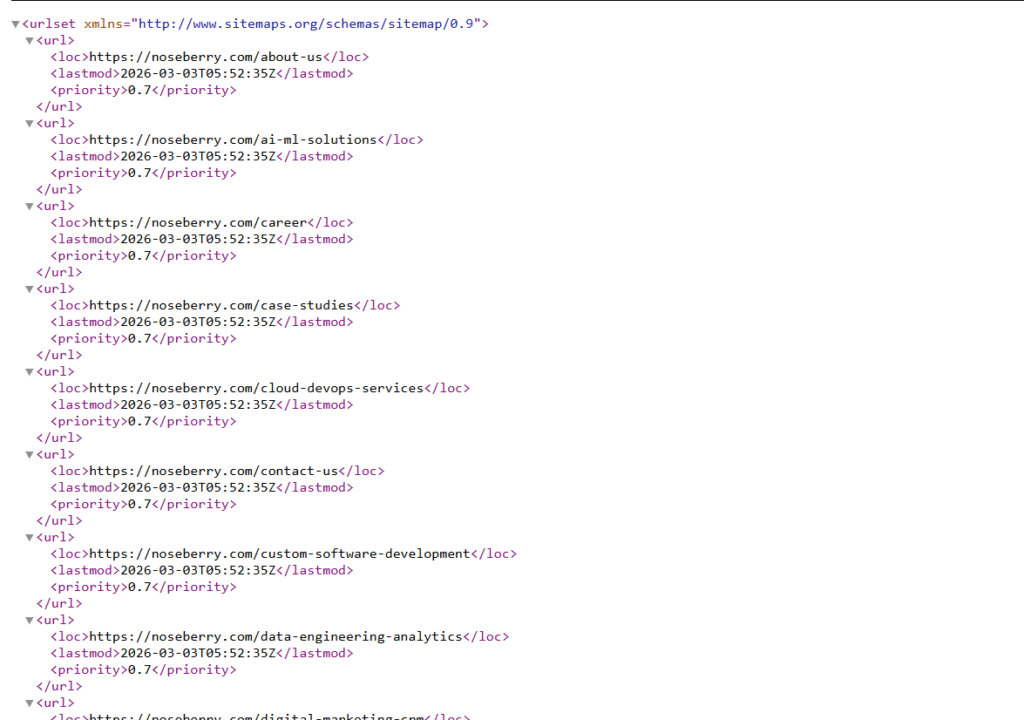
Generate a clean sitemap.xml reflecting new URLs.
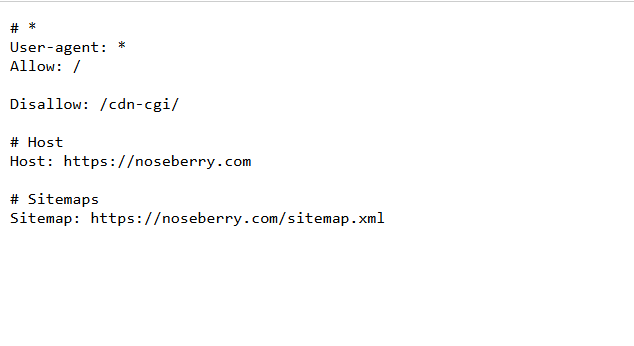
Update robots.txt carefully to avoid blocking important sections.
Think strategically about the new structure
Migration is an opportunity to improve site architecture, internal linking, and content organization. Do not simply replicate old structural inefficiencies.
Involve the SEO team early
SEO must be integrated during design and development, not just reviewed before launch. Navigation depth, header structure, and crawl paths all affect performance.
Set expectations with stakeholders
Short term fluctuations can occur even with perfect execution. Communicate realistic timelines and impact projections to leadership teams.
Review staging before launch
Crawl the staging site and verify:
- Indexability settings
- Internal linking
- Canonical tags
- Page speed
- Metadata accuracy
This final audit reduces launch day surprises.
During SEO Website Migration Checklist
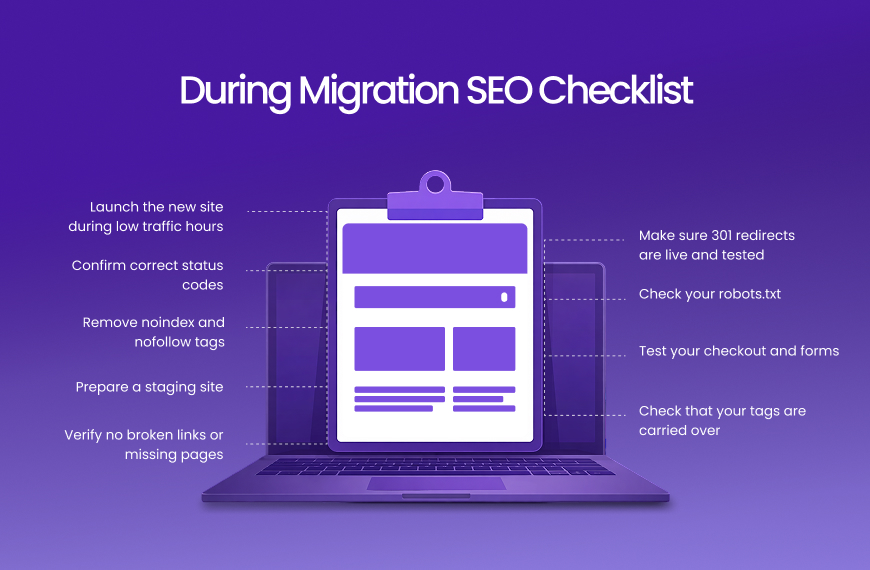
Launch the new site during low traffic hours
For a successful seo website migration, choose a launch window when traffic is lowest to reduce risk and pressure. If technical issues appear, they can be fixed before peak sessions begin. This protects both rankings and revenue during the most sensitive stage of seo migration.
Remove noindex and nofollow tags if applied during staging
During website migration seo, staging environments often use noindex directives to block search engines. Before going live, confirm these tags are removed so Google can crawl and index the new site. A missed noindex tag can severely damage an website migration seo.
Confirm correct status codes
Every important page should return a 200 status code, and old URLs must return 301 redirects. Incorrect status codes such as 302 or 404 can weaken seo migration performance. Verifying status codes ensures search engines interpret your website migration seo signals correctly.
Make sure 301 redirects are live and tested
Test your redirect plan immediately after launch to confirm that each old URL points to the correct new URL. A proper 301 redirect helps preserve link equity during seo website migration. Broken or missing redirects are one of the biggest risks in website migration seo.
Verify no broken links or missing pages
Run a full crawl of the live site to identify broken internal links and 404 errors. These issues can waste crawl budget and hurt rankings after seo migration. Fixing them quickly supports a stable website migration seo process.
Check that your tags are carried over
Ensure title tags, meta descriptions, canonical tags, and structured data are correctly implemented. Missing metadata can reduce visibility after website migration seo. Metadata continuity is essential in any professional seo migration services workflow.
Submit updated XML sitemap to Google Search Console
After launch, submit the new sitemap so search engines can discover updated URLs faster. This step supports faster reindexing during website migration seo. It also helps Google understand your new site structure more efficiently.
Check your robots.txt
Review robots.txt to confirm that important pages are not blocked unintentionally. A small mistake in this file can disrupt website migration seo results. Proper crawl access is critical for successful seo migration.
Test your checkout and forms
Ensure forms, checkout pages, and tracking systems function correctly after launch. Traffic from seo website migration must convert properly to maintain business continuity. Technical functionality is as important as rankings during seo migration.
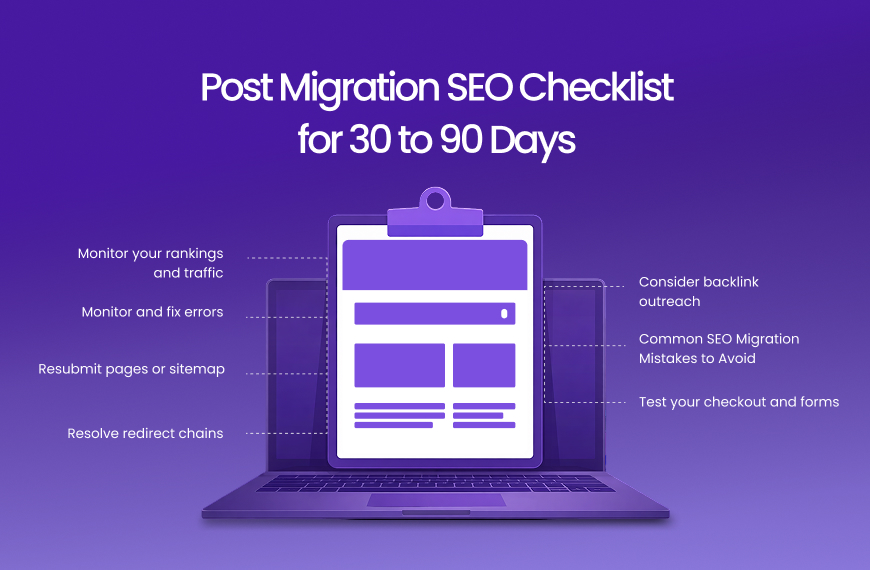
Post Migration SEO Checklist for 30 to 90 Days
Track keyword rankings and organic traffic weekly after website migration seo. Temporary fluctuations are normal, but sustained drops require investigation. Ongoing monitoring is essential to measure seo migration success.
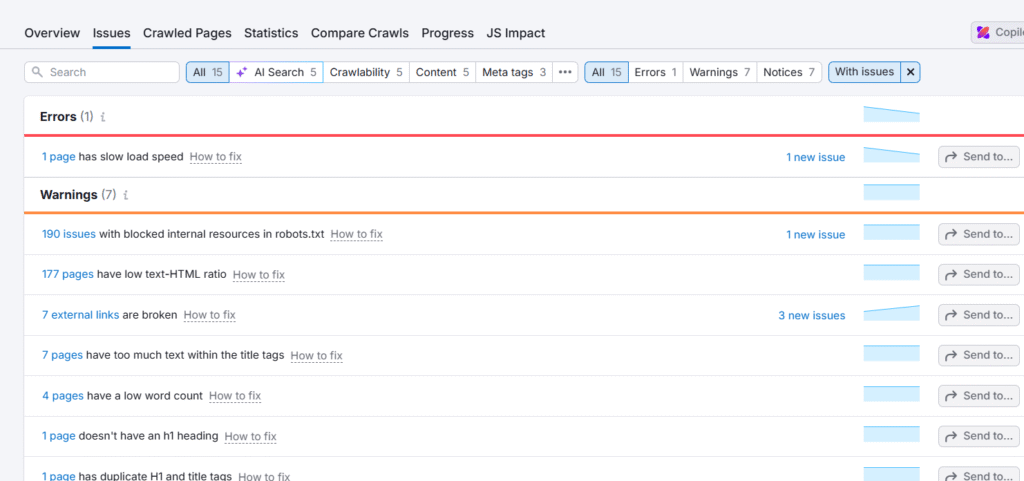
Monitor and fix errors
Use Search Console to identify crawl errors, indexing issues, and redirect problems. Addressing these quickly strengthens your website migration seo performance. Early fixes prevent long term ranking damage.
Resubmit pages or sitemap updates as needed
If key pages are not indexed after seo migration, request indexing manually. Updating and resubmitting your sitemap helps reinforce correct signals. This keeps your seo website migration aligned with search engine expectations.
Resolve redirect chains
Replace multi step redirects with direct 301 mappings to preserve authority. Redirect chains can weaken link equity during website migration seo. Cleaning them up improves crawl efficiency and seo migration stability.
Consider backlink outreach
Reach out to high authority sites linking to old URLs and request direct updates. Although 301 redirects pass value, direct backlinks are stronger for website migration. This step strengthens long term seo migration results.
Schedule a post launch SEO audit after 30 days
Conduct a structured audit to evaluate indexation, crawl depth, and internal linking. A 30 day review helps identify hidden issues after website migration seo. Continuous review ensures the seo migration remains stable and optimized.
Common SEO Migration Mistakes to Avoid
Even experienced teams make avoidable errors. The most common include:
- Failing to create a detailed redirect map
- Launching without crawl testing
- Blocking search engines unintentionally
- Changing URLs and content simultaneously without analysis
- Ignoring backlink preservation
If your migration involves high traffic volumes or revenue dependency, reviewing structured migration strategies or consulting experienced professionals such as those at Noseberry Digitals can significantly reduce risk.
Conclusion
A successful seo website migration is never accidental. It is the result of careful planning, structured execution, and disciplined monitoring before, during, and after launch. Every redirect, status code, internal link, and sitemap update plays a role in preserving rankings and protecting organic traffic. When website migration seo is handled strategically, search equity transfers smoothly, crawl paths remain intact, and performance stabilizes within a predictable time frame.
On the other hand, rushed seo migration decisions can lead to lost visibility, broken backlinks, indexing issues, and months of recovery work. That is why businesses treat website migration seo checklist planning as a critical investment rather than a technical formality. Whether you manage it internally or work with experienced seo migration services, the goal remains the same: protect authority, maintain continuity, and create a stronger technical foundation for future growth.
In the long run, website migration is not just about avoiding traffic loss. It is about upgrading your digital infrastructure without sacrificing the trust you have already built with search engines and users.