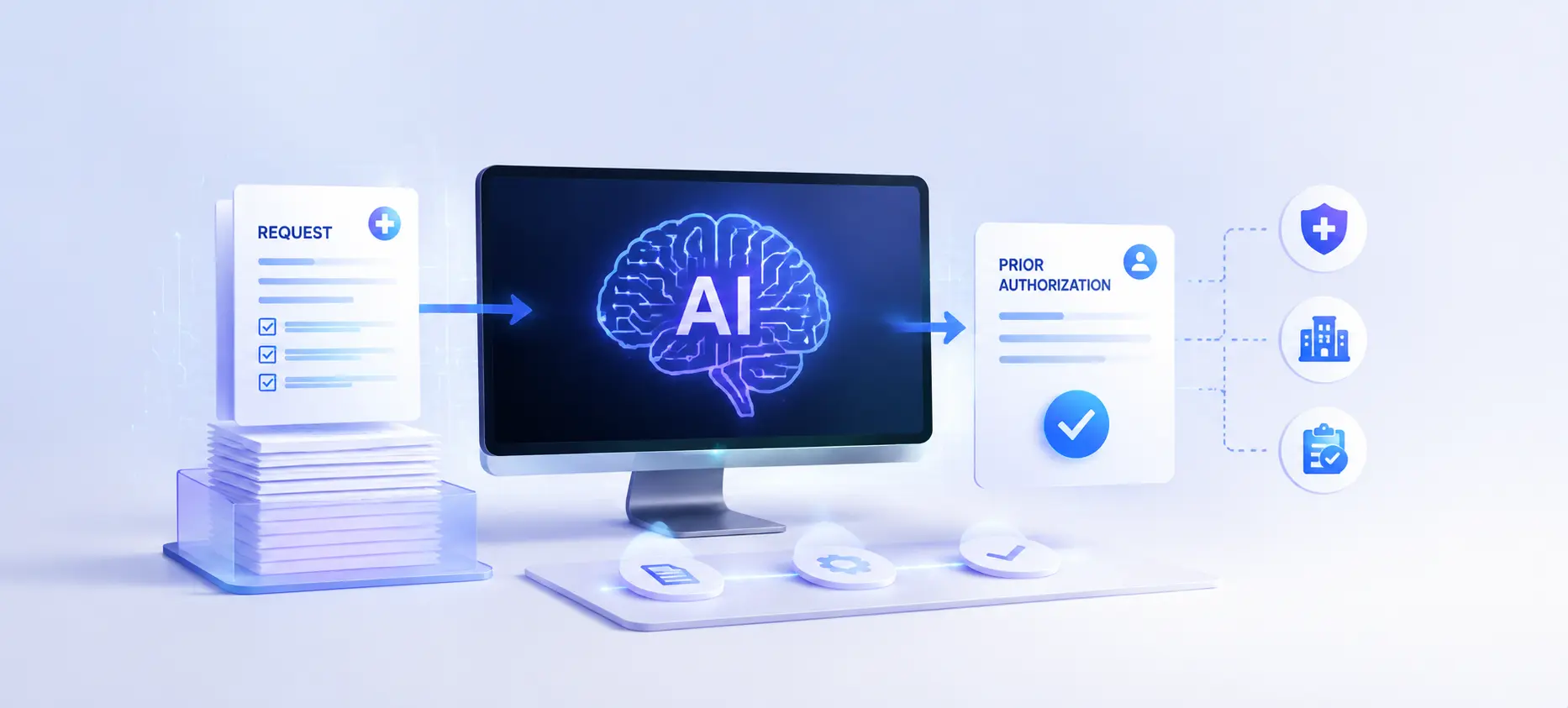

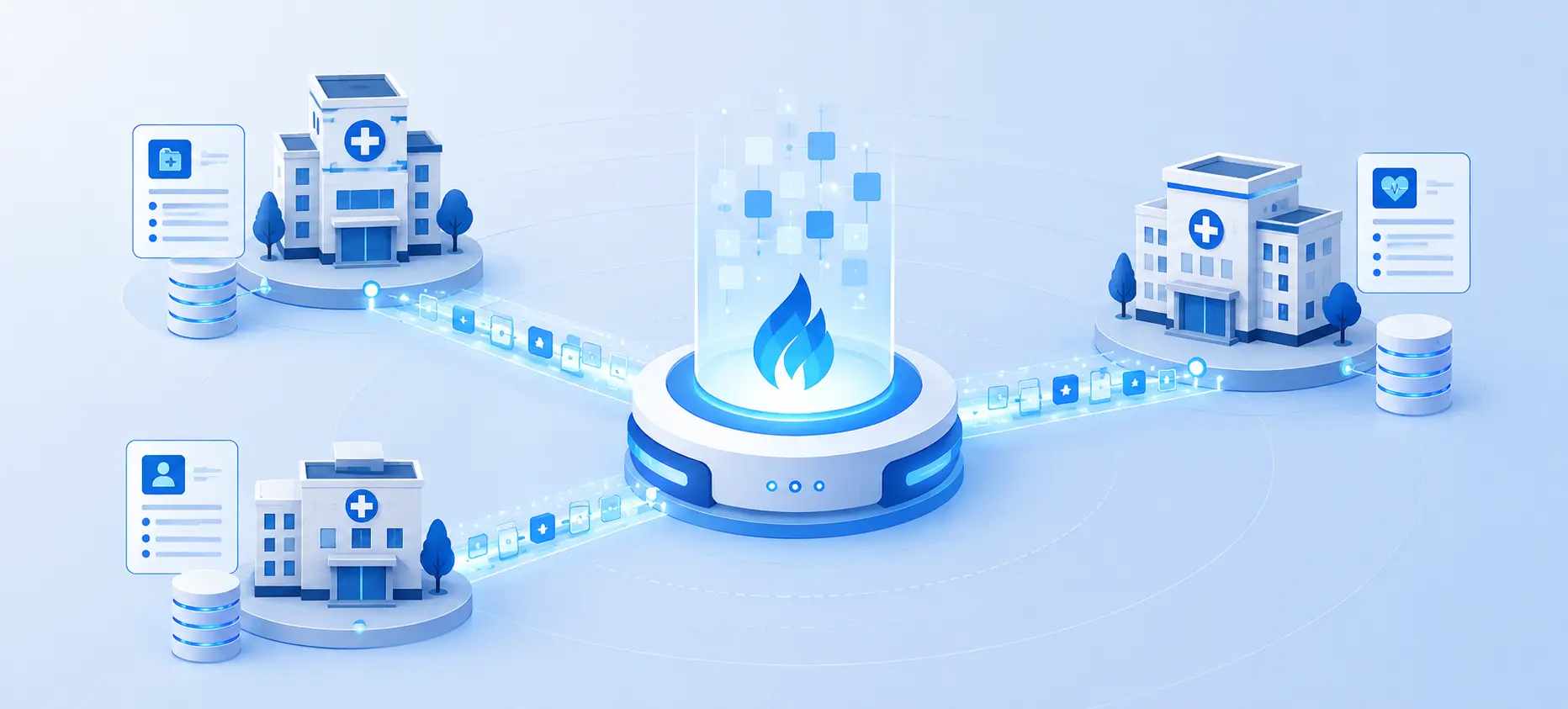
A FHIR integration connects your app to Epic, Cerner, or athenahealth using one shared data format. No custom one-off build needed. It's the fastest legal way to read or write patient data across EHRs. Each vendor still gates access differently, though, and that's where most teams lose months. Get the sequencing right and a single-vendor build can land in ten to twelve weeks instead of six.
In my decade helping health tech teams connect to Epic, Cerner, and athenahealth, timelines rarely blow up because of the FHIR spec itself. They blow up on vendor-specific approval steps nobody budgeted for. This guide covers what actually eats the calendar on each platform. It also covers realistic cost and timeline ranges, plus how to sequence the work so you don't repeat mistakes I've watched dozens of healthcare teams make.
What Is FHIR Integration and Why Does It Matter for Epic, Cerner, and athenahealth?
FHIR integration is the process of connecting a third-party application to an electronic health record using the Fast Healthcare Interoperability Resources standard. It works because FHIR defines patient data as structured, reusable resources instead of locked-in vendor formats. That structure is what lets the same app talk to Epic, Cerner, and athenahealth with far less custom code per vendor.
Epic, Oracle Health (formerly Cerner), and athenahealth all publish FHIR R4 APIs aligned to the US Core implementation guide. That's the baseline the industry settled on through 2026. That shared standard is genuinely useful, but it doesn't remove the separate registration, security review, and go-live process each vendor still runs on its own timeline. According to a 2026 Epic integration guide from EngineerBabu, Epic alone covers roughly 42.3 percent of US acute care hospitals and holds more than 250 million patient records. Getting this one integration right often decides whether a health tech product reaches most of the market at all.
Why Do FHIR Integrations With Epic Take So Long?
Epic integrations take two to fourteen months, mainly because of per-site governance, not the API itself. Read-only projects typically finish in four to six months. Anything touching write access, clinical notes, or multiple hospital sites stretches toward nine to eighteen months, since each site needs its own security and clinical safety review.
A few numbers explain why. Epic now publishes over 750 no-cost APIs and interfaces through open.epic. It even charges nothing for USCDI-compliant data access itself, according to Arkenea's 2026 Epic EHR integration guide. The cost sits elsewhere:
Focused read-only integration work through first production deployment: $65,000 to $150,000
Complex integrations with write workflows and HL7 v2 feeds: $150,000 to $300,000 or more
Ongoing annual maintenance: 15 to 25 percent of the original build cost
Additional sites after the first: 2 to 6 weeks of enablement work each
Write access is the real timeline killer. Clinical notes, orders, and problem list updates all require extra clinical safety review at every hospital, on top of the standard security review.
How Does Integrating With the Epic API Actually Work?
Getting your app to integrate with the Epic API means choosing among four pathways, not just calling one endpoint. Most teams start with FHIR R4 for on-demand reads. They add SMART on FHIR for OAuth 2.0 authorization next, then reach for HL7 v2 or Bulk FHIR only once the core read path is proven.
The four Epic integration pathways
FHIR R4 REST APIs. The modern default for on-demand reads. Write operations exist but require more scope justification and a longer review.
SMART on FHIR. The OAuth 2.0 layer that authorizes your app, either launched from inside Epic's Hyperspace interface or as a standalone app the user opens separately.
HL7 v2 messaging. Still the standard for real-time clinical events like admissions and discharges, usually routed through an integration engine such as Mirth Connect.
Bulk FHIR export. Built for population health and analytics work, where you need many patients' records at once instead of one at a time.
Our data engineering team tells every client the same thing before they touch Epic: request only the OAuth scopes you genuinely need at launch. Requesting write scopes you won't use for six months is one of the most common reasons Epic's review team sends an application back for revision.
What's Different About Integrating With Cerner (Oracle Health)?
Oracle Health, the company formerly known as Cerner, runs FHIR R4 read-only integrations in two to four months at $35,000 to $70,000. That's roughly 15 to 20 percent faster than equivalent Epic projects, according to Taction Software's 2026 Oracle Health integration guide. Adding write capability extends that to four to seven months and $70,000 to $160,000.
The centralized Millennium architecture is why Oracle Health moves a bit faster than Epic. Developers self-register and get immediate sandbox access, with synthetic data that behaves like a real Millennium instance. Production approval still takes four to eight weeks of technical and security review after that.
The real friction point is terminology, not access. Millennium stores clinical data using internal Cerner codes rather than standard vocabularies. Your integration has to resolve those codes to ICD-10, SNOMED CT, LOINC, and RxNorm before the data means anything elsewhere. Unfiltered ADT patient-update messages at a busy hospital can also flood a naive integration. Filtering those message types early is worth the extra week it takes.
What's Different About Integrating With athenahealth?
athenahealth integrations tend to move noticeably faster than Epic or Oracle Health, completing in roughly 40 to 50 percent less time according to Taction Software's athenahealth API integration guide. That's largely because its cloud-native, single-instance architecture skips the per-hospital governance model entirely. Developer sandbox access is instant too, with no approval gate before you start building against synthetic data.
That speed comes with its own quirks. athenahealth organizes data by department rather than by facility. Most API calls need a departmentid parameter that has no real equivalent in Epic or Cerner. Dates also arrive as MM/DD/YYYY instead of ISO 8601, which trips up parsing logic built for other EHRs. Real-time updates rely on pull-based polling, with one to five minutes of latency, rather than true push webhooks. Every practice can define its own custom fields too, so per-practice mapping stays unavoidable even on an otherwise standardized platform.
Epic vs Cerner vs athenahealth: Comparing FHIR Integration Timelines and Costs
Here's how the three platforms stack up once you're past the sandbox and into a real production build. These ranges reflect a single-site, single-pathway integration; multi-site rollouts add time per site on every platform.
Platform | Read-only timeline | Read-only cost | Write-access timeline |
|---|---|---|---|
Epic | 4 to 6 months | $65,000 to $150,000 | 9 to 18 months |
Oracle Health (Cerner) | 2 to 4 months | $35,000 to $70,000 | 4 to 7 months |
athenahealth | 1.5 to 4 months | $25,000 to $70,000 | 3 to 5 months |
The pattern holds across every vendor we've built against. Read access is always faster and cheaper than write access, and the gap gets wider the more hospital sites you add. If your product genuinely needs write access on day one, budget for the longer number, not the shorter one.
How Do You Avoid the Common Mistakes That Turn a Fast Build Into a Slow One?
Most integration delays trace back to five repeatable mistakes, not to the FHIR specification itself. Fixing the order of operations, rather than the code, is usually what gets a stalled project moving again.
Treating sandbox success as production-ready. A working sandbox call proves your code works against synthetic data. It proves nothing about the vendor's security review, which starts a separate clock.
Requesting broad OAuth scopes up front. Ask only for what your first release actually uses. Scope creep in the application is one of the most common reasons reviewers send it back.
Starting vendor registration after development, not before. Epic and Oracle Health's approval processes run for weeks in parallel with development, not after it. Kick off registration on day one.
Ignoring FHIR version drift between hospital systems. Not every site on the same EHR vendor runs the identical FHIR version or configuration. Test against more than one site's sandbox before assuming your mapping generalizes.
Underestimating terminology and code mapping work. Whether it's Cerner's internal codes or athenahealth's per-practice custom fields, mapping data to standard terminologies is where hidden weeks disappear.
Our AI product assurance team catches most of these during testing, well before a client's first vendor review call, which is usually the cheapest place to catch them.
What Role Does TEFCA Play in the Future of Multi-EHR Integration?
TEFCA, the Trusted Exchange Framework and Common Agreement, is the federal effort to let health data flow between qualified health information networks using FHIR APIs. It replaces one-off, point-to-point connections. TEFCA exists because universal FHIR support across EHR vendors still doesn't automatically connect every hospital, payer, and public health agency to each other.
Micky Tripathi, the former National Coordinator for Health Information Technology at ONC, put the FHIR mandate's early results plainly. "Now, 95 percent of EHR vendors actually certified to that by mid-January. I'm really encouraged that the industry picked that up and worked with it," he told Healthcare Innovation Group. That near-universal certification is exactly why TEFCA can build FHIR-based exchange on a standard that already exists almost everywhere.
For a team building against Epic, Cerner, and athenahealth today, TEFCA matters less as an immediate integration target and more as a signal. The direction of travel is toward fewer bespoke, bilateral connections and more shared network access. Architecture decisions that assume permanent vendor-by-vendor integration will age poorly.
What Should You Look for in a FHIR Integration Partner?
The right FHIR integration partner has shipped production Epic, Cerner, and athenahealth connections before, not just read the documentation. Ask to see their multi-vendor track record before signing anything. Vendor-specific gotchas rarely show up until someone has hit them firsthand.
Look for a partner who can show you:
Real production go-lives across at least two of the three major EHR vendors, not just sandbox demos
A clear plan for terminology mapping (ICD-10, SNOMED CT, LOINC, RxNorm) before development starts, not after
Experience navigating each vendor's specific security and clinical safety review process
HIPAA-aligned data handling built into the architecture from day one, not bolted on before go-live
A realistic timeline that separates read-only work from write-access work, since collapsing the two into one estimate is a common way projects go over budget
Our case studies page includes examples of exactly this kind of multi-vendor healthcare work. Our AI consultancy team is happy to review your specific vendor mix before you sign a statement of work with anyone.
Conclusion
FHIR integration with Epic, Cerner, and athenahealth is genuinely faster and cheaper than the custom, point-to-point builds teams shipped a decade ago. That only holds, though, if you plan for each vendor's separate governance process instead of assuming the shared FHIR standard erases those differences. Epic's per-site clinical review, Cerner's terminology mapping, and athenahealth's department-centric data model are three different problems wearing the same "FHIR R4" label.
Here's the single biggest lesson from every project I've watched succeed or stall. Start vendor registration and security review on day one, not after your development team finishes building. That one sequencing change routinely saves four to eight weeks per vendor. That's often the entire difference between hitting your launch date and missing it.
If you're scoping a multi-EHR build right now, don't guess at timelines from a single vendor's documentation page. Our data engineering and healthcare integration teams can map your Epic, Cerner, or athenahealth requirements against realistic timelines before you commit to a launch date. Get in touch and we'll walk through your vendor mix together.